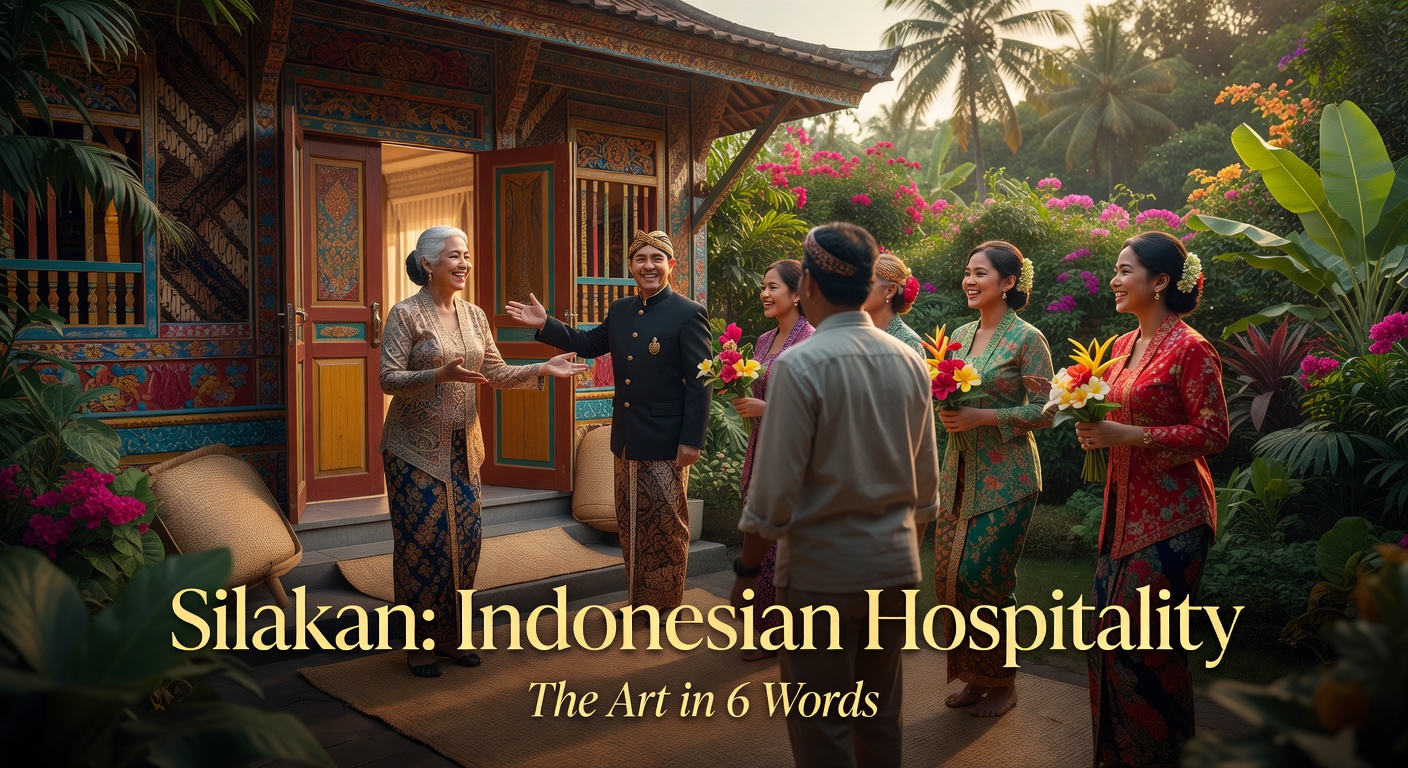
There's a word in Indonesian that contains an entire cultural philosophy: "Silakan." Pronounced roughly as "see-lah-kan," this magical phrase translates to "please, go ahead," but it embodies so much more than a simple invitation. It's infused with the warmth of a welcoming smile, the generosity of an open heart, and the cultural ethos that makes Indonesia feel like a second home to visitors. As you dive into learning Bahasa Indonesia, mastering "silakan" and its variations isn't just about language—it's about unlocking doors to genuine connections and understanding the heart of Indonesian culture. If you're a beginner exploring polite expressions, you'll find that this word is your key to navigating social situations with ease and respect.
In Indonesia, hospitality is a way of life, deeply rooted in traditions that emphasize community, humility, and mutual care. Unlike in some Western cultures where invitations might feel formal or obligatory, "silakan" turns everyday interactions into opportunities for building relationships. Imagine arriving at a friend's house in Jakarta; the moment you step through the door, you're not just a guest—you're family. This spirit is why Indonesia often tops lists as one of the friendliest countries for travelers. To make this concept even more accessible, let's break down the six key phrases featuring "silakan," and I'll share practical tips, common mistakes to avoid, and cultural insights along the way. For more on basic greetings and politeness, check out Lesson 2.1, which covers foundational phrases that pair perfectly with these.
The Six Magic Phrases
These six phrases form the backbone of Indonesian hospitality, each one a step in the graceful dance of welcome. They're not just words; they're invitations to participate in the social fabric of Indonesia. As you learn them, practice saying them out loud—Indonesian pronunciation is melodic and often involves a gentle rise and fall in tone. Let's expand on each one with real-life scenarios, additional examples, and tips to help you use them confidently.
1. Silakan Masuk — Please Come In
When you arrive at an Indonesian home, you're likely to hear "Silakan masuk!" (See-lah-kan mah-sook!), which warmly invites you inside. This phrase isn't just about opening a door; it's a cultural cue that signifies trust and inclusion. In many Indonesian households, especially in places like Bali or Java, homes are designed with open layouts to foster community, reflecting the concept of "gotong royong," or collective mutual assistance.
Practical usage scenario: Picture yourself visiting a local family in Yogyakarta. They might say, "Silakan masuk, rumah ini rumah Anda juga!" (Please come in, this house is your house too!), emphasizing that you're not an outsider. A common mistake to avoid is stepping inside without removing your shoes—always look for the pile of slippers or sandals at the entrance, as this shows respect for the home. If you're carrying gifts, respond with "Terima kasih, saya bawa buah untuk Anda" (Thank you, I brought fruit for you), which aligns with cultural norms.
To expand your vocabulary, try using variations like "Silakan masuk dan merasa seperti di rumah" (Please come in and feel at home), pronounced as "see-lah-kan mah-sook dan meh-rah-sah see-per-ti dee ruh-mah." Cultural insight: In rural areas, this phrase might be accompanied by a hand gesture toward the door, highlighting the non-verbal aspects of Indonesian communication. For more on greetings and entering spaces politely, dive into Lesson 2.6, where we cover body language in Indonesian interactions.
2. Silakan Duduk — Please Sit Down
Once you're inside, your host will likely gesture to a seat and say "Silakan duduk!" (See-lah-kan doo-doock!), inviting you to make yourself comfortable. This isn't just politeness; it's a sign of honor, often directing you to the best spot in the room, like a cushioned chair facing the family area. In Indonesian culture, seating arrangements can reflect social hierarchy, so accepting this invitation promptly shows appreciation.
Practical tip: Don't stand awkwardly—sit down right away, but wait for your host to join you before getting too relaxed. A common mistake is assuming the seat; instead, let them guide you. For example, if you're at a family gathering, you might hear "Silakan duduk di sini, lebih nyaman" (Please sit here, it's more comfortable), pronounced as "see-lah-kan doo-doock dee see-nee, lee-bih nyoo-man." Respond with "Terima kasih, ini bagus sekali!" (Thank you, this is great!), to express gratitude.
Fun with Indonesian collects all of it — phrases, pronunciation, and culture — into one guide you can carry.
Cultural context: This phrase ties into the Indonesian value of "kehormatan" (respect), where hosts prioritize guests' comfort to strengthen bonds. In a business setting, like a meeting in an office, "Silakan duduk" might be followed by offering tea, blending hospitality with professionalism. If you're learning Indonesian for travel, practice this in everyday scenarios, such as at a warung (small eatery), to build confidence.
3. Silakan Minum — Please Drink
Hospitality in Indonesia often starts with refreshment, and "Silakan minum!" (See-lah-kan mee-noom!) is the phrase that makes it happen. Expect a glass of sweet tea (teh manis) or fresh coconut water to appear almost instantly—it's a non-negotiable gesture of care, rooted in the tropical climate where staying hydrated is essential.
Practical usage: If you're invited to a meal, your host might say, "Silakan minum dulu, sebelum makan" (Please drink first, before eating), pronounced as "see-lah-kan mee-noom doo-loo, se-bel-um mah-kan." Always accept, even if you're not thirsty; declining can make the host feel they've failed in their duties. A tip to avoid awkwardness: Take a sip and compliment it with "Enak banget!" (It's really delicious!), which encourages the conversation.
Common mistake: Politely refusing because you're on a diet—Indonesians might interpret this as rudeness, so it's better to accept and take small sips. Cultural insight: This practice stems from historical traditions in villages, where sharing drinks symbolized unity during communal events. Compare this to Western customs with a quick table:
| Aspect | Indonesian Hospitality (Silakan Minum) | Western Hospitality (e.g., U.S.) |
|---|---|---|
| Timing | Offered immediately upon arrival | Often served with the meal |
| Expectation | Acceptance is courteous | Declining is more acceptable |
| Cultural Focus | Builds community bonds | Emphasizes individual choice |
For deeper dives into food and drink etiquette, check out Lesson 5.5.
4. Silakan Makan — Please Eat
Food is at the heart of Indonesian hospitality, and "Silakan makan!" (See-lah-kan mah-kan!) is the ultimate invitation to share a meal. Hosts will insist with phrases like "Silakan makan, jangan malu-malu!" (Please eat, don't be shy!), encouraging you to dig in despite any initial hesitation.
Scenario: At a family dinner featuring nasi goreng (fried rice), your host might say, "Silakan makan sebanyak yang Anda inginkan" (Please eat as much as you want), pronounced as "see-lah-kan mah-kan seh-ba-nyak yang An-da in-gin-kan." Eat enthusiastically and respond with "Lezat sekali!" (It's so tasty!), to show appreciation. Practical tip: Use your right hand for eating if no utensils are provided, as the left is considered unclean in many contexts.
Common mistake: Being too reserved—Indonesians value enthusiasm, so avoid picking at your food. Cultural insight: This phrase highlights "musyawarah" (consensus), where sharing meals fosters harmony. In regions like Sumatra, meals are communal, reinforcing social ties.
5. Silakan Pilih — Please Choose
Beyond homes, "Silakan pilih!" (See-lah-kan pee-lih!) is common in shops and markets, inviting you to browse freely. For instance, at a street vendor, you might hear "Silakan pilih buah yang segar" (Please choose the fresh fruit), giving you space to decide without pressure.
Tip: Respond with "Saya mau yang ini" (I want this one), and always negotiate politely. Avoid rushing—take your time to show interest. This phrase reflects Indonesia's relaxed shopping culture, contrasting with faster-paced retail elsewhere.
6. Silakan Bicara — Please Speak
In conversations or meetings, "Silakan bicara!" (See-lah-kan bee-cha-rah!) encourages you to share your thoughts. It's a nod to inclusive communication, often used in group settings to ensure everyone feels heard.
Practical advice: If in a discussion, say "Silakan bicara dulu" (Please speak first) to others, promoting equality. Mistake to avoid: Interrupting—wait your turn to maintain harmony.
The "Jangan Malu-Malu" Philosophy
This philosophy, meaning "don't be shy," adds depth to Indonesian interactions, balancing guest humility with host insistence. It's a cultural dance that teaches patience and warmth, often seen in social events. For foreigners, embracing it means responding openly, like saying "Tidak malu, terima kasih!" (Not shy, thank you!). Lesson 2.2 explores this further, offering more on social nuances.
Reciprocating Hospitality
To keep the spirit alive, reciprocate with gestures like bringing gifts or learning phrases. Here's an expanded list: Bring local treats, say "Terima kasih banyak" repeatedly, and invite hosts back with "Ayo main ke rumah saya!" (Come to my house!). A table can help compare:
| Reciprocation Method | In Indonesia | In Western Cultures |
|---|---|---|
| Gifts | Small, thoughtful items | Often reciprocal value |
| Thanks | Repeated and effusive | Once or twice |
| Invitations | Warm, open-ended | Specific dates |
Why This Matters
Understanding "silakan" bridges cultural gaps, turning travels into meaningful experiences. In Indonesia, every invitation strengthens ties, making you feel truly welcome. So, practice these phrases daily—start with a simple "Silakan" in your next conversation and watch the warmth unfold! For more, explore our Polite Essentials module.