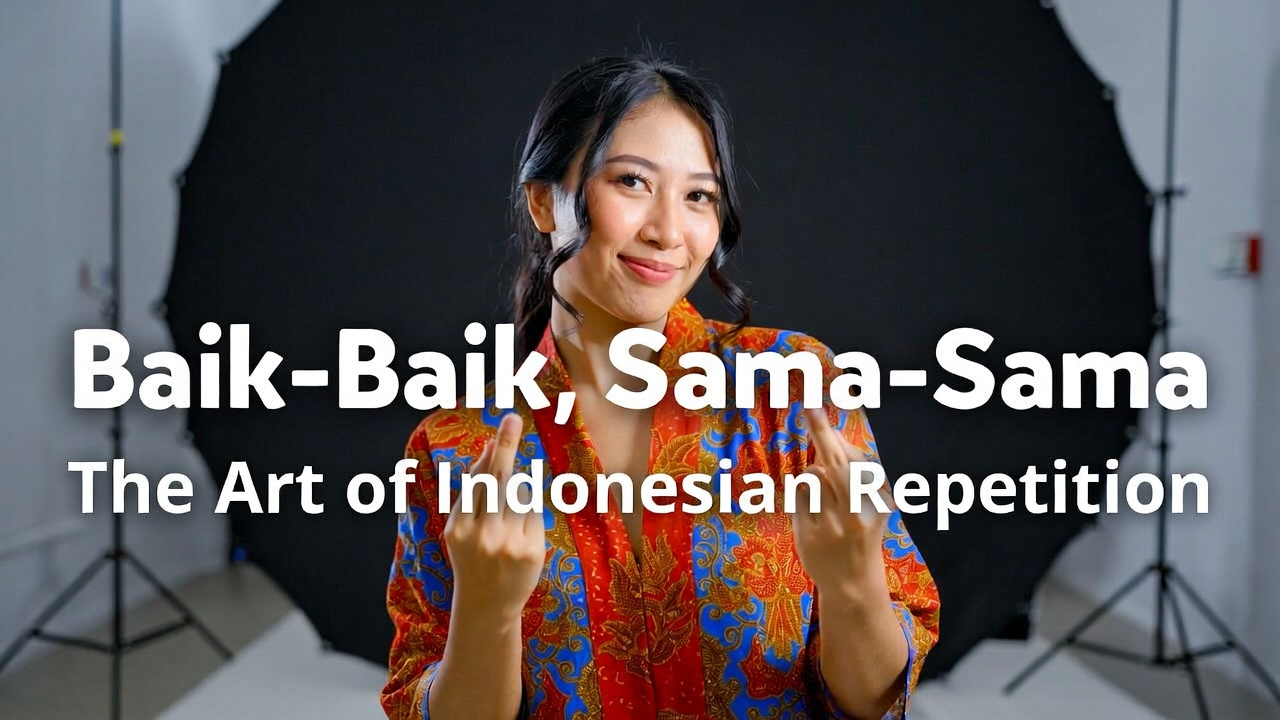
Indonesian Word Repetition: Why 'Baik-Baik' Means More Than 'Good-Good'
If you’ve been learning Indonesian for even a few days, you’ve noticed something charming: Indonesians love to repeat words. Baik-baik saja. Sama-sama. Hati-hati. It’s one of the most distinctive features of Bahasa Indonesia, and understanding why it happens will level up your fluency fast.
What Repetition Does
In Indonesian, repeating a word changes or intensifies its meaning. It’s not random – there are patterns:
1. Emphasis / Intensity
- Baik = good – Baik-baik = really/thoroughly good ("baik-baik saja" = I'm perfectly fine)
- Pelan = slow – Pelan-pelan = very slowly, carefully
- Cepat = fast – Cepat-cepat = hurry up! quickly!
2. Plurality
Indonesian doesn’t have a simple plural form (no adding "s" like English). Instead, repetition makes things plural:
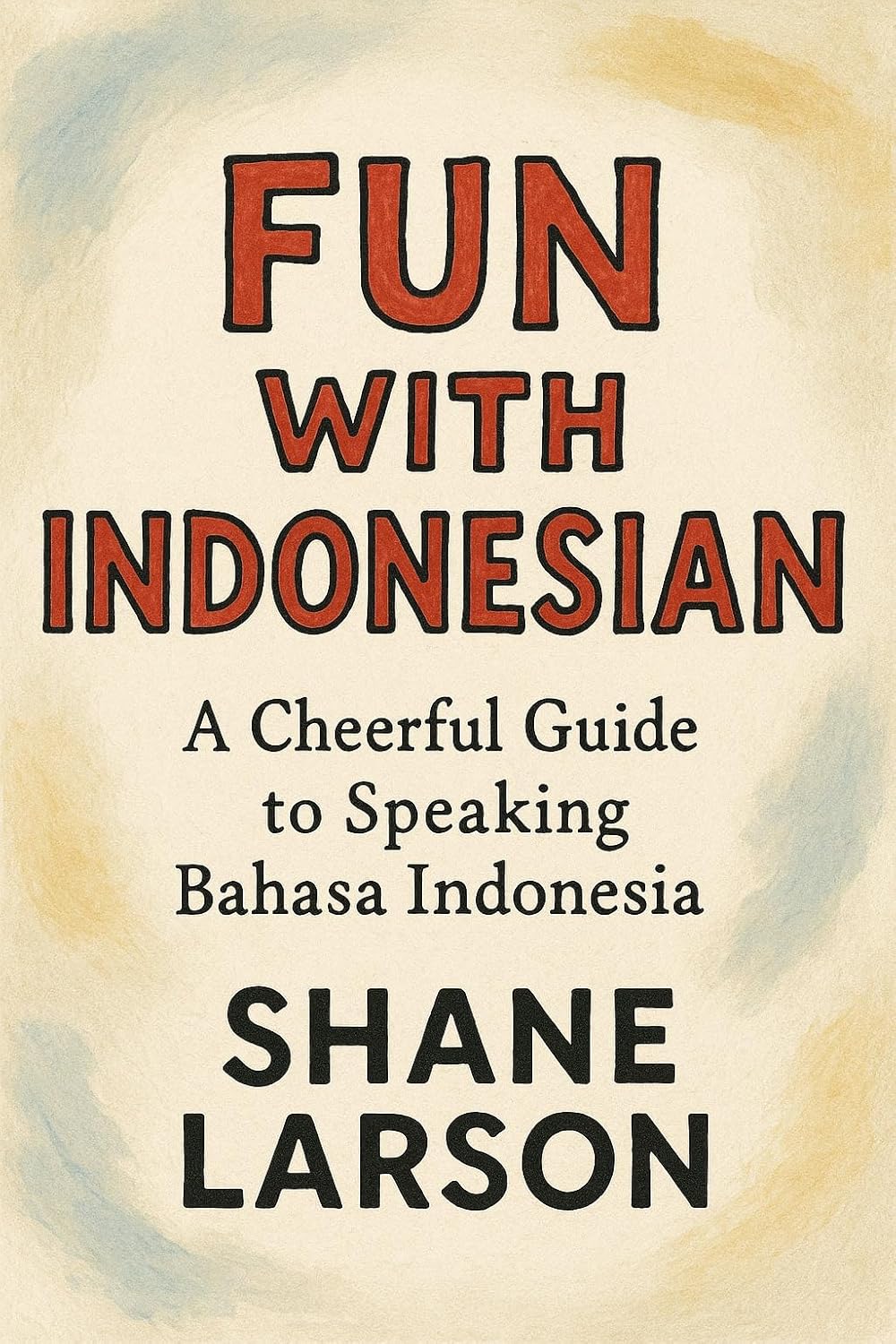
Fun with Indonesian collects all of it — phrases, pronunciation, and culture — into one guide you can carry.
- Anak = child – Anak-anak = children
- Teman = friend – Teman-teman = friends
- Orang = person – Orang-orang = people
3. Creating New Meanings
Some repeated words develop their own distinct meaning:
- Hati = heart/liver – Hati-hati = be careful (literally "heart-heart")
- Sama = same – Sama-sama = you're welcome (literally "same-same")
- Mata = eye – Mata-mata = spy (literally "eye-eye"!)
- Kura = tortoise-related – Kura-kura = turtle
4. Doing Something Casually
- Jalan = walk/road – Jalan-jalan = to stroll, go for a walk, go out
- Makan = eat – Makan-makan = to eat casually, have a feast
- Main = play – Main-main = to play around, not be serious
Why This Matters
Word repetition reflects something deep about Indonesian communication style: warmth, emphasis through rhythm rather than volume, and playfulness. When someone says "hati-hati di jalan" (be careful on the road), the doubled word feels more caring than a single "hati" would. When friends say "sama-sama," the repetition creates a warm back-and-forth energy.
The Prefix "Se-"
Related to repetition is the prefix "se-" which means "one" and appears everywhere:
- Sepuluh = se + puluh = one ten = ten
- Sehari = se + hari = one day
- Sedikit = se + dikit = a little bit
- Setuju = se + tuju = one direction = to agree
Quick Practice
Try turning these singular words into plurals or intensified forms:
- Buku (book) – ? (buku-buku = books)
- Rumah (house) – ? (rumah-rumah = houses)
- Pagi (morning) – ? (pagi-pagi = early in the morning)
Once you start noticing this pattern, you’ll hear it everywhere in Indonesian conversation. Explore more grammar patterns through our interactive lessons at Fun with Indonesian!