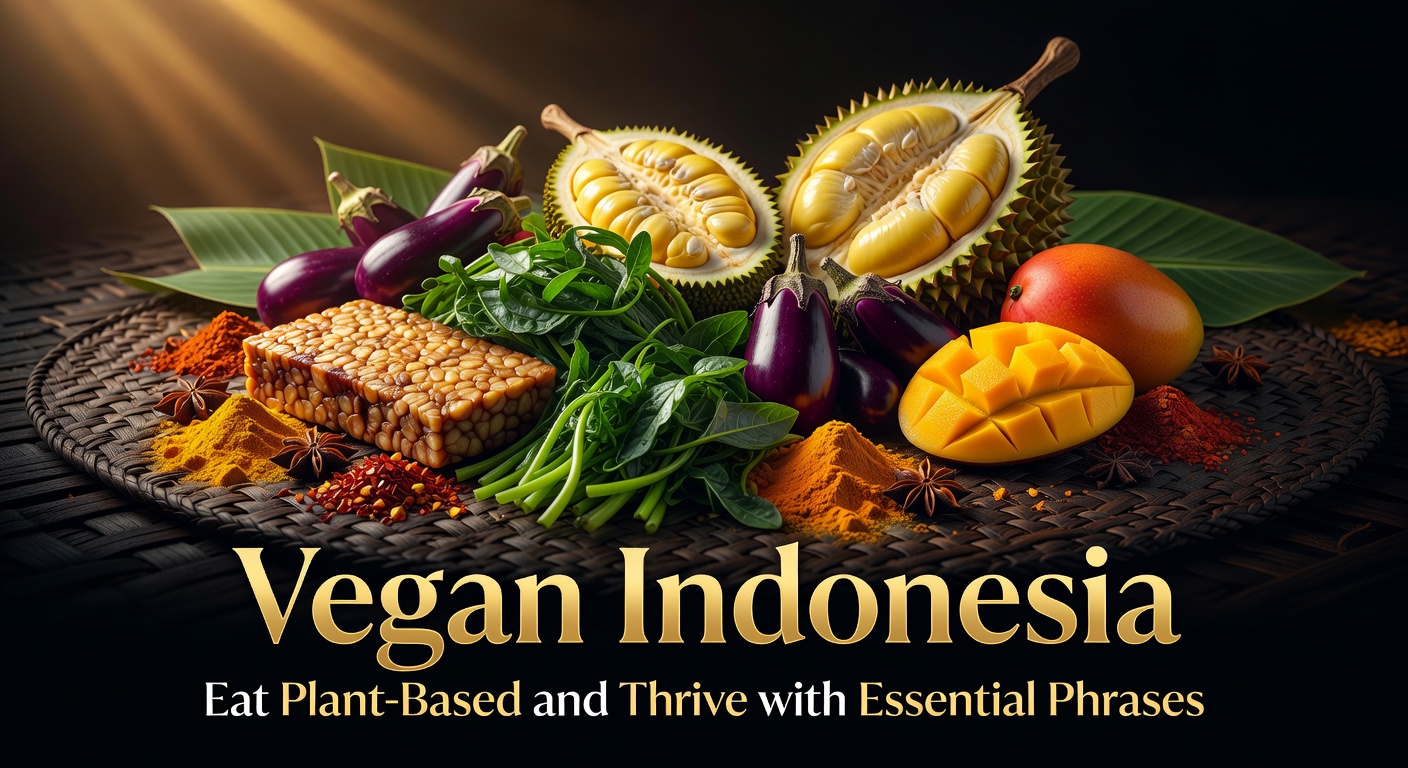
Indonesia is a paradise for food lovers, with its vibrant street markets, aromatic warungs, and colorful feasts that celebrate fresh ingredients and bold flavors. But if you're vegetarian or vegan, you might wonder: Can I actually eat well here without compromising my dietary choices? The good news is, absolutely yes! Indonesian cuisine boasts an incredible array of plant-based options, thanks to its rice-centric meals, abundant vegetables, and innovative soy-based staples. From the humble tempeh to spicy vegetable stir-fries, you'll find plenty to enjoy. Still, navigating the food scene requires some savvy—think hidden animal ingredients like shrimp paste and the need for key phrases to communicate your preferences. With a bit of preparation, you can dive into Indonesia's culinary world without going hungry, and maybe even discover your new favorite vegan dish along the way.
To make your plant-based adventure smoother, let's break this down step by step. We'll cover essential phrases, common pitfalls, mouthwatering dishes, and practical tips to help you order confidently. Remember, Indonesians are generally warm and accommodating, especially when you show enthusiasm for their culture. So, embrace the experience, and let's get started!
The Essential Phrases
Mastering a few key Indonesian phrases can turn a potentially awkward ordering situation into a fun interaction. Most people you'll encounter speak basic English, but using Bahasa Indonesia shows respect and often leads to better service. Pronunciations are straightforward—Indonesian is phonetic, so sound it out as it's written. For more on Indonesian pronunciation, check out Lesson 5.1 in our site.
The Basics
Start with these foundational phrases to clearly state your dietary needs. They're simple, direct, and widely understood across the archipelago.
- Saya vegetarian (Sah-yah veh-jeh-tah-ree-an) — I'm vegetarian. Most Indonesians recognize this borrowed word, but it's good for quick introductions.
- Saya tidak makan daging (Sah-yah tee-dak mah-kan dah-ging) — I don't eat meat. This is your go-to for avoiding beef, pork, or chicken—super useful in mixed-dish scenarios.
- Saya tidak makan ikan (Sah-yah tee-dak mah-kan ee-kan) — I don't eat fish. Remember, "ikan" covers all seafood, so this helps dodge unexpected shrimp or tuna.
- Saya tidak makan telur (Sah-yah tee-dak mah-kan teh-lur) — I don't eat eggs. A must for vegans, as eggs sneak into many fried foods.
- Saya tidak makan susu (Sah-yah tee-dak mah-kan soo-soo) — I don't eat dairy. Use this for milk, cheese, or butter in dishes like creamy soups.
- Saya hanya makan sayur (Sah-yah hah-nya mah-kan sah-yur) — I only eat vegetables. This is a gentle way to steer the conversation toward veggie-heavy options, and it's a great opener for market vendors.
A practical tip: Combine these for clarity. For example, say, "Saya vegetarian, jadi saya tidak makan daging dan telur" (I'm vegetarian, so I don't eat meat and eggs). This reinforces your preferences and reduces misunderstandings. A common mistake is assuming "vegetarian" means the same thing everywhere— in Indonesia, it might not exclude fish, so always specify.
Checking Ingredients
Once you've stated your basics, dive deeper to ensure your meal is truly plant-based. These questions help you probe for hidden ingredients without sounding rude.
- Ada daging di dalam ini? (Ah-dah dah-ging dee dah-lam ee-nee?) — Is there meat in this? Ask this for soups, stews, or mixed plates where meat might be camouflaged.
- Pakai terasi? (Pah-kai teh-rah-see?) — Does it use shrimp paste? This is crucial, as terasi is a flavor enhancer in many dishes—more on that below.
- Pakai kecap ikan? (Pah-kai kuh-chap ee-kan?) — Does it use fish sauce? Though not as common as in Thai cuisine, it's found in some regional recipes.
- Bisa tanpa daging? (Bee-sah tan-pa dah-ging?) — Can you make it without meat? Indonesians are often flexible cooks, especially in markets or small eateries.
- Bisa tanpa telur? (Bee-sah tan-pa teh-lur?) — Can you make it without eggs? Handy for fried rice or omelet-style dishes.
For a real-world scenario, imagine you're at a warung (street food stall). You spot a tempting vegetable stir-fry and say, "Ini pakai terasi atau kecap ikan?" If they say yes, politely request, "Bisa tanpa itu?" This shows you're engaged and appreciative. To avoid common errors, don't wait until after ordering—always ask upfront to prevent disappointment.
Advanced Phrases for Tricky Situations
Sometimes, you need to level up your vocabulary. If standard phrases don't cut it, try these for more specific requests:
- Saya vegan, jadi tidak pakai produk hewani (Sah-yah veh-gan, ja-di tee-dak pah-kai pro-duk heh-wah-nee) — I'm vegan, so no animal products. While "vegan" isn't as familiar, explaining it this way helps.
- Bisa ganti dengan sayur? (Bee-sah gan-tee dan-gan sah-yur?) — Can you replace it with vegetables? Useful for customizing plates, like swapping meat in a skewer dish.
For cultural insight, Indonesians value harmony and might hesitate to say no directly, so phrases like these can guide them without pressure. Check out Lesson 7.4 for more on polite language in daily conversations.
The Nuclear Option
For strict dietary needs: "Saya alergi daging / ikan / telur" (Sah-yah ah-ler-jee dah-ging / ee-kan / teh-lur) — I'm allergic to meat / fish / eggs. It's not ideal to fib, but this conveys urgency effectively in a culture where allergies are taken seriously. Use sparingly, and follow up with a smile to keep things light.
Fun with Indonesian collects all of it — phrases, pronunciation, and culture — into one guide you can carry.
The Hidden Traps
Even with the best intentions, Indonesian dishes can harbor surprise animal ingredients. Understanding these common traps will help you stay safe and enjoy your meals. Let's explore each one with some cultural context and avoidance tips.
Terasi (Shrimp Paste)
This is the biggest culprit for vegetarians and vegans. Terasi is a fermented shrimp paste that's a staple in Indonesian cooking, adding umami to everything from sambal to vegetable stir-fries. It's deeply rooted in the culture, especially in Java and Sumatra, where it's seen as essential for authentic flavor. But in the final dish, it's often invisible, mixed into sauces or pastes.
Practical tip: Always ask "Pakai terasi?" before ordering. If you're in a hurry, opt for dishes like fresh salads or fruit-based snacks. A common mistake is assuming a veggie dish is safe just because it looks green—double-check! For comparison, think of it like Worcestershire sauce in Western cooking; it's everywhere until you start questioning.
Kaldu Ayam (Chicken Broth)
Many soups and rice dishes use chicken or beef broth as a base, even if no meat is visible. This practice stems from traditional recipes where broth enhances depth, particularly in family-style meals. In rural areas, it's a way to use every part of the animal, reflecting Indonesia's resourceful food culture.
To avoid it: Ask "Pakai kaldu ayam?" and request "Hanya air putih" (just water) as a base. Pro tip: In halal-certified spots, which are common, you're more likely to find broth-free options.
Kecap Ikan (Fish Sauce) and Other Additives
Fish sauce appears in some dishes, especially in Chinese-Indonesian fusion cuisine, like noodle soups or stir-fries. Lard (minyak babi) might pop up in baked goods in non-Muslim areas like Bali, where pork is more prevalent.
Cultural insight: Indonesia's diverse religions influence ingredients—Muslim-majority regions avoid pork, but seafood-based flavors are widespread. Here's a quick comparison table to help you spot differences:
| Ingredient | Common In | Why It's Used | How to Avoid |
|---|---|---|---|
| Terasi | Sambal, veggies | For umami and saltiness | Ask upfront and choose fresh dishes |
| Kaldu Ayam | Soups, rice | Adds depth and flavor | Request vegetable broth or water |
| Kecap Ikan | Stir-fries, noodles | Enhances savoriness | Specify no fish products |
| Minyak Babi | Pastries, fries | For crispiness | Stick to fruit-based desserts or ask in advance |
By being proactive, you'll navigate these traps like a pro.
Amazing Plant-Based Indonesian Dishes
Indonesia's plant-based heritage is vast, influenced by Hindu, Buddhist, and Islamic traditions that emphasize vegetables and legumes. Many dishes originated as everyday staples for farmers and have evolved into street food favorites. Let's dive deeper into some classics, with more examples, recipes, and cultural notes.
Tempeh (Tempe) and Tahu (Tofu): The Protein Stars
Indonesia didn't just adopt tempeh—it invented it! This fermented soybean cake is a nutritional powerhouse, packed with protein, fiber, and probiotics. Try tempe goreng (fried tempeh), which has a crispy exterior and nutty inside—perfect with rice and veggies. For a vegan twist, make your own at home: soak soybeans, ferment with a starter, and fry. Cultural context: Tempeh is a Javanese invention, symbolizing sustainable eating, and it's affordable everywhere.
Tahu (tofu) is equally versatile: tahu goreng (fried tofu) for a quick snack, tahu isi (stuffed tofu) with veggies, or tahu bacem (sweet braised tofu) in a tamarind glaze. Pro tip: Pair it with sambal without terasi for a spicy kick.
Salad and Sauce-Based Delights
Dishes like gado-gado and pecel are vegetarian icons. Gado-gado features steamed veggies with a rich peanut sauce—request "tanpa terasi" to keep it vegan. It's a Balinese favorite, often enjoyed as a communal meal. Similarly, pecel, a Javanese specialty, uses a spicier peanut sauce with greens like spinach and beans. Usage scenario: Order it at a market for a refreshing lunch, and practice saying, "Pecel satu, pedas sedang" (One pecel, medium spicy).
Soups, Stir-Fries, and More
Sayur asem is a tangy vegetable soup with tamarind, corn, chayote, and peanuts—naturally vegan and ideal for hot days. Urap mixes steamed veggies with grated coconut, offering a subtle sweetness that's popular in Bali. For street food vibes, ketoprak combines tofu, rice noodles, and peanut sauce—say "Ketoprak tanpa telur" for a fully vegan version.
Regional variations add excitement: In Sumatra, try gulai sayur (vegetable curry), while Java offers lotek, similar to gado-gado but with raw veggies. A common mistake is over-spicing—start mild and adjust.
Exploring Regional Vegan Gems
Venture beyond the basics with these lesser-known options:
- Nasi goreng sayur (Vegetable fried rice): Customize with "Nasi goreng sayur, tanpa daging, tanpa telur". It's a quick, filling meal, and in Aceh, you might find it with local herbs.
- Lontong sayur: Rice cakes in veggie broth, a breakfast staple in Jakarta. For cultural insight, this dish highlights Indonesia's love for communal eating during Ramadan.
The Ordering Script and Beyond
To put it all together, here's an expanded script for a typical interaction, with tips for different settings:
You: "Permisi, Pak. Saya vegetarian, tidak makan daging dan ikan. Ada rekomendasi makanan sayur?" (Excuse me, Sir. I'm vegetarian, I don't eat meat or fish. Do you have vegetable recommendations?)
Vendor: "Tentu, ada gado-gado atau tempe goreng!" (Sure, there's gado-gado or fried tempeh!)
You: "Gado-gado satu, tanpa terasi ya. Dan tempe goreng." (One gado-gado, without shrimp paste please. And fried tempeh.)
In a restaurant, add "Bisa lihat menu vegan?" (Can I see the vegan menu?). For markets, be ready for haggling—it's part of the fun!
The Bali Advantage and Beyond
While Bali leads with its vegan-friendly spots in Ubud and Seminyak—think smoothie bowls and plant-based curries—the rest of Indonesia is catching up. In Yogyakarta, explore tempeh stalls, and in Jakarta, hit up modern cafes. Everywhere, staples like tofu and veggies are abundant. For more food vocabulary, dive into Lesson 7.6 and try whipping up your own gado-gado at home. So, grab your phrase book and savor Indonesia's flavors—your next plant-based adventure awaits!