
If you've spent even a little time with Bahasa Indonesia, you've probably noticed that the language has two different words that both translate to "no" or "not" in English: tidak and bukan. For English speakers, this is one of those early stumbling blocks — because in English, "not" does it all. In Indonesian, the choice between these two words depends on what you're negating, and once you understand the logic, it clicks fast.
The Core Rule
> Tidak negates verbs and adjectives.
> Bukan negates nouns (and noun phrases).
Think of it this way: if you're talking about an action or a state, use tidak. If you're talking about a thing or an identity, use bukan.
It sounds simple, and it largely is — but the nuances are worth exploring, especially as sentences get more complex.
Tidak — Negating Verbs and Adjectives
Tidak is the workhorse of Indonesian negation. You'll use it constantly. It attaches to verbs and adjectives to flip their meaning.
With Verbs
- Saya tidak mau — I don't want (to)
- Saya tidak mengerti — I don't understand
- Dia tidak datang — He/she didn't come
- Kami tidak tahu — We don't know
- Saya tidak suka kopi — I don't like coffee
- Mereka tidak makan daging — They don't eat meat
Notice that tidak sits directly before the verb. Unlike English, there's no auxiliary verb needed ("don't," "doesn't," "didn't") — Indonesian handles tense through context, time words, and particles. Tidak itself is tense-neutral.
With Adjectives
- Tidak pedas — Not spicy
- Tidak mahal — Not expensive
- Tidak jauh — Not far
- Tidak panas — Not hot
- Tidak sulit — Not difficult
- Makanan ini tidak enak — This food is not tasty
Adjectives in Indonesian function similarly to verbs — they don't require a linking "to be" like English does. So tidak handles both categories in the same way.
A Quick Pattern to Remember
If you can substitute the word with a verb or adjective in English, you almost certainly want tidak.
Bukan — Negating Nouns and Identity
Bukan is used when you're saying something is not a particular thing — a person, a place, an object, a category, or a role. It negates noun phrases.
Negating People and Roles
- Saya bukan orang Indonesia — I'm not Indonesian (literally: I am not an Indonesian person)
- Dia bukan dokter — He/she is not a doctor
- Saya bukan guru — I'm not a teacher
- Mereka bukan polisi — They are not police
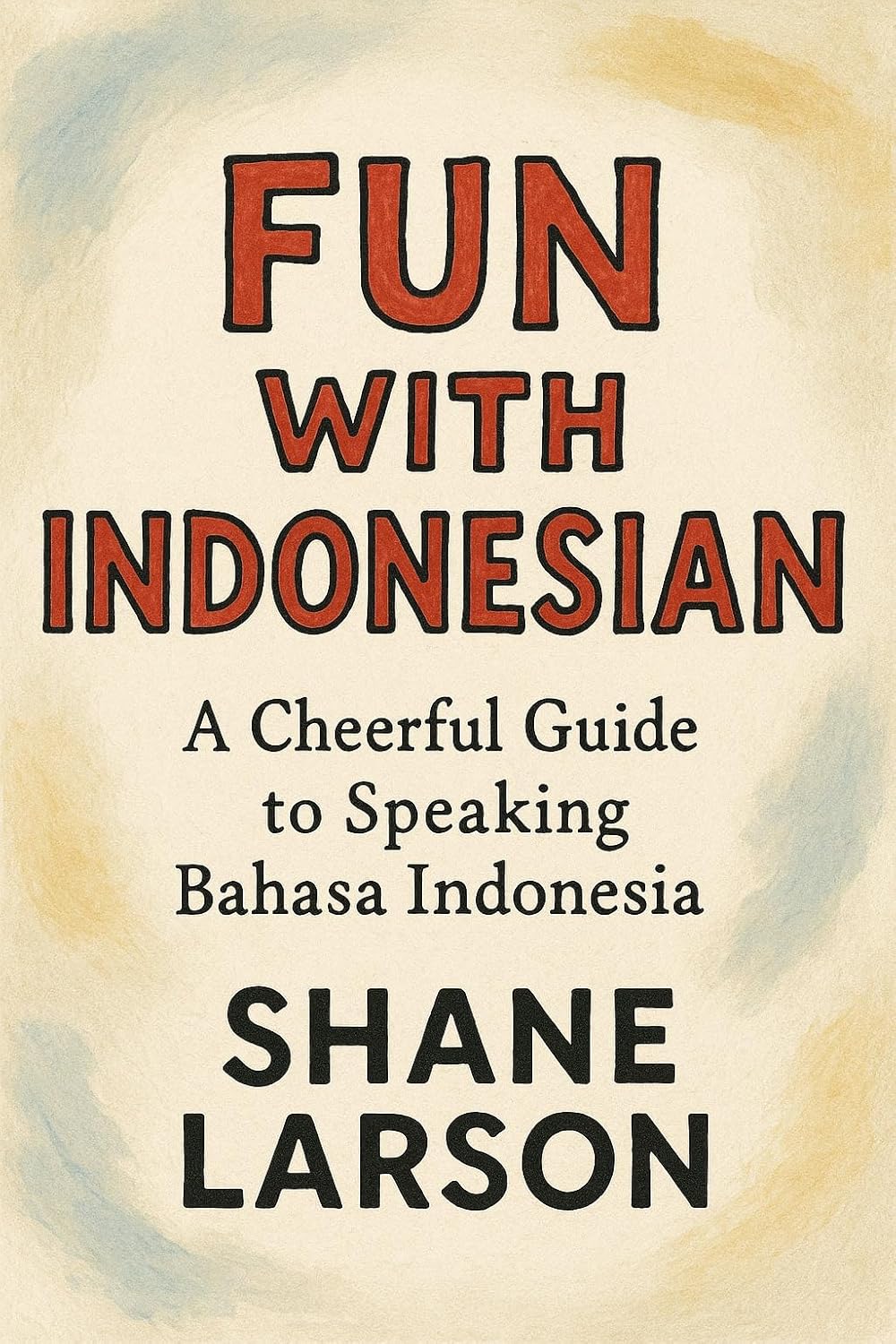
Fun with Indonesian collects all of it — phrases, pronunciation, and culture — into one guide you can carry.
Negating Objects
- Ini bukan kopi — This is not coffee
- Itu bukan tas saya — That is not my bag
- Ini bukan restoran — This is not a restaurant
Negating Places and Abstract Nouns
- Jakarta bukan ibu kota lagi — Jakarta is no longer the capital (factually true as of the capital relocation to Nusantara)
- Ini bukan masalah besar — This is not a big problem
- Itu bukan alasan yang baik — That is not a good reason
The Identity Test
A helpful shortcut: if you're completing a sentence that uses "to be" in English ("is," "am," "are") and what follows is a noun, you almost certainly want bukan.
- "She is a teacher" → "She is not a teacher" = Dia bukan guru
- "This is coffee" → "This is not coffee" = Ini bukan kopi
Side-by-Side Comparison
Sometimes a minimal pair makes the contrast clearest:
| Sentence | Meaning | Why |
|---|---|---|
| Dia tidak sakit | He/she is not sick | Sakit (sick) is an adjective → tidak |
| Dia bukan pasien | He/she is not a patient | Pasien (patient) is a noun → bukan |
| Ini tidak manis | This is not sweet | Manis (sweet) is an adjective → tidak |
| Ini bukan gula | This is not sugar | Gula (sugar) is a noun → bukan |
| Saya tidak bekerja | I don't work / I'm not working | Bekerja (to work) is a verb → tidak |
| Saya bukan karyawan | I'm not an employee | Karyawan (employee) is a noun → bukan |
Casual Speech: How Tidak Shrinks
In everyday Indonesian conversation — especially among younger speakers and in informal settings — tidak almost always contracts into a shorter form.
- Tidak → Nggak or Gak
- Nggak is pronounced roughly like "ngak" — the ng is the same nasal sound as in "sing"
- Gak is the even shorter, more clipped version
You'll hear these constantly in casual speech, on Indonesian TV shows, in songs, and in everyday conversation. Tidak in informal settings can sound formal or even stiff.
> Saya nggak mau — I don't want to (casual)
> Nggak tahu — Don't know / I dunno (very casual)
> Gak apa-apa — It's okay / No problem (extremely common phrase)
Bukan, by contrast, stays bukan in both formal and casual speech. It doesn't have a common shortened form in the way tidak does.
Bonus: Belum — "Not Yet"
Once you're comfortable with tidak and bukan, add belum to your toolkit. It's a third type of negation with a softer, more culturally nuanced feel.
Belum means not yet — it implies that something hasn't happened, but leaves open the possibility that it will.
Examples
- Sudah menikah? — Are you married?
Belum. — Not yet.
- Sudah makan? — Have you eaten?
Belum. — Not yet.
- Sudah belajar? — Have you studied?
Belum belajar. — Haven't studied yet.
- Apakah kamu sudah tiba? — Have you arrived yet?
Belum, masih di jalan. — Not yet, still on the way.
Why Belum Matters Culturally
In Indonesian culture, belum often functions as a softer, more polite alternative to an outright "tidak." When asked whether you're married, responding belum rather than tidak implies that you're open to the possibility — it avoids a flat refusal that might invite further questioning or seem overly blunt. This sensitivity to indirect communication is woven throughout Bahasa Indonesia.
The Sudah / Belum Pair
Sudah (already) and belum (not yet) form a natural pair in Indonesian:
| Question | Yes answer | No answer |
|---|---|---|
| Sudah makan? (Have you eaten?) | Sudah. (Already.) | Belum. (Not yet.) |
| Sudah tidur? (Have you slept?) | Sudah. | Belum. |
| Sudah bayar? (Have you paid?) | Sudah. | Belum. |
Quick Reference Summary
| Word | Negates | Casual form | Example |
|---|---|---|---|
| Tidak | Verbs, adjectives | Nggak / Gak | Saya tidak suka → Saya nggak suka |
| Bukan | Nouns, noun phrases | Bukan (unchanged) | Ini bukan kopi |
| Belum | Completed actions (not yet) | Belum (unchanged) | Belum makan |
Mastering these three words will dramatically improve your Indonesian fluency. Negation is everywhere in natural speech, and choosing the right word makes the difference between sounding learned and sounding natural. Practice using tidak, bukan, and belum across our lesson modules to build real confidence!