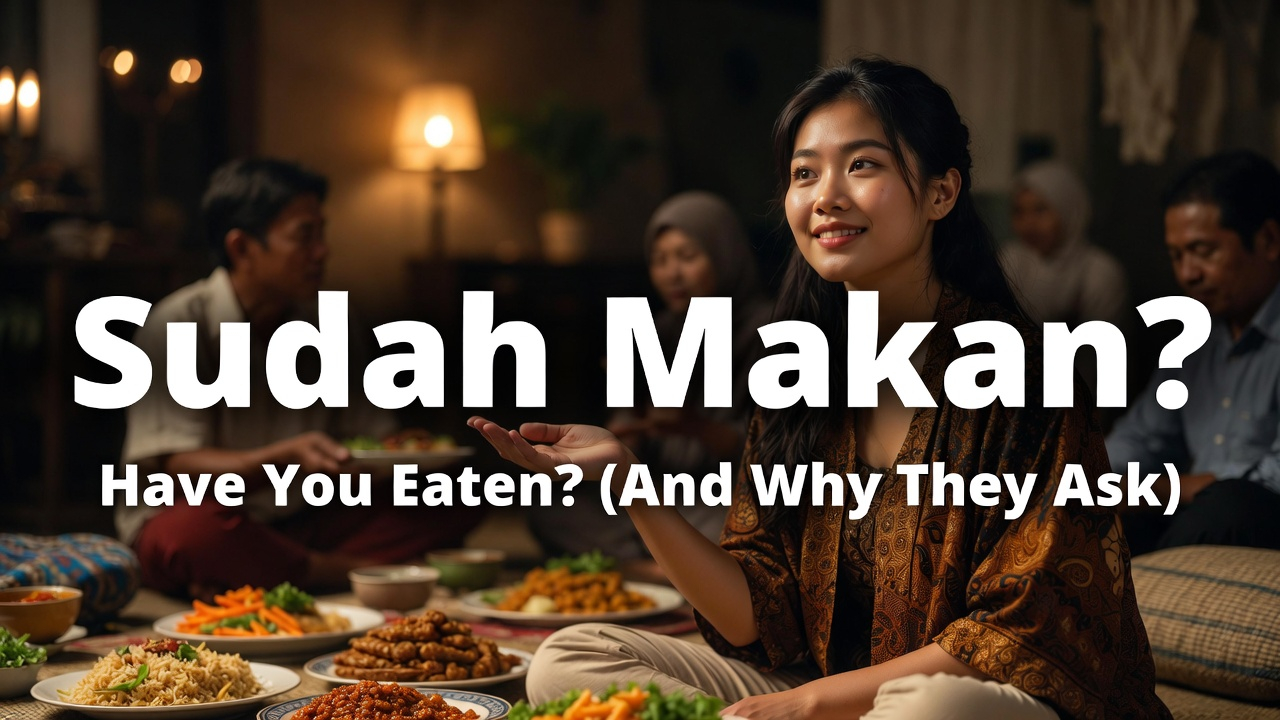
You’ll be walking down a street in Indonesia, and a friendly stranger will ask: "Sudah makan?" – "Have you eaten?"
Your first instinct might be to think: Why does this person care about my lunch? But in Indonesian culture, this question isn’t really about food. It’s about caring.
Food = Love
"Sudah makan?" functions as a greeting, similar to "How are you?" in English. It’s a way of saying: I notice you. I hope you’re doing well. I hope you’re taken care of. Food is so central to Indonesian social life that checking whether someone has eaten is the most natural way to express concern.
If you answer "belum" (not yet), don’t be surprised if the person offers to take you somewhere to eat or even cooks for you. Indonesian hospitality around food is legendary and deeply sincere.
Other Cultural Surprises
The Personal Questions
Within minutes of meeting you, Indonesians will cheerfully ask:
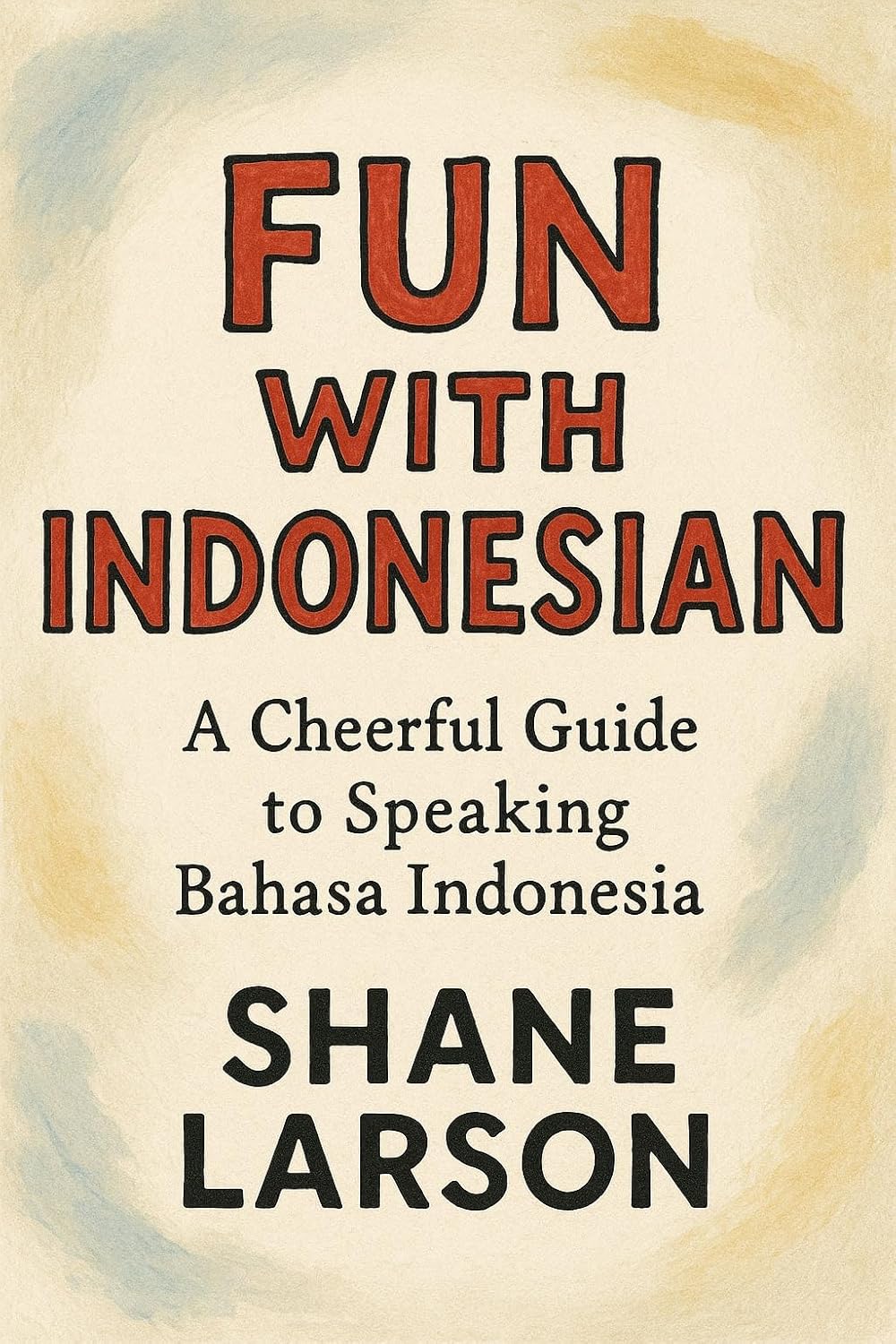
Fun with Indonesian collects all of it — phrases, pronunciation, and culture — into one guide you can carry.
- "Sudah menikah?" – Are you married?
- "Anak berapa?" – How many children?
- "Dari mana?" – Where are you from?
- "Umur berapa?" – How old are you?
This isn’t rude. It’s not nosy. It’s how Indonesians build connections. They want to know you as a person, and these questions are the standard social toolkit. The correct response to "are you married?" if you’re single is "Belum" (not yet) – which politely implies you will be someday.
The Magic Phrase
Say "Saya sedang belajar bahasa Indonesia" (I’m learning Indonesian) and watch what happens. Faces light up. People slow their speech. Strangers become your personal language tutors. Indonesians are fiercely proud of Bahasa Indonesia – a language that was deliberately designed to unite 700+ local languages across 17,000 islands – and they adore anyone who makes the effort to learn it.
Rubber Time (Jam Karet)
If someone says they’ll be there at 2:00, they might arrive at 2:30. Or 3:00. This isn’t considered rude – it’s "jam karet" (rubber time), the Indonesian approach to scheduling that prioritizes flexibility over rigid punctuality. Social gatherings, especially, run on their own clock. (Business meetings in major cities are becoming more punctual, however.)
The Positive Default
Ask "Apa kabar?" (How are you?) and the answer will almost always be "Baik-baik saja" (I'm fine) – even if things aren’t great. This isn’t dishonesty. It reflects the Indonesian cultural value of rukun (harmony) – not burdening others with your problems in casual conversation. Among close friends, more honest answers are common.
Greetings Are Non-Negotiable
In smaller towns and villages, greeting people is expected. A simple "Selamat pagi" or "permisi" when entering someone’s space shows respect. Skipping a greeting is one of the few things that can genuinely offend.
The Takeaway
Learning Indonesian isn’t just about memorizing words – it’s about understanding a culture that values warmth, harmony, and genuine human connection above almost everything else. The language reflects these values at every turn.
Start exploring Indonesian culture through language in our full lesson library!