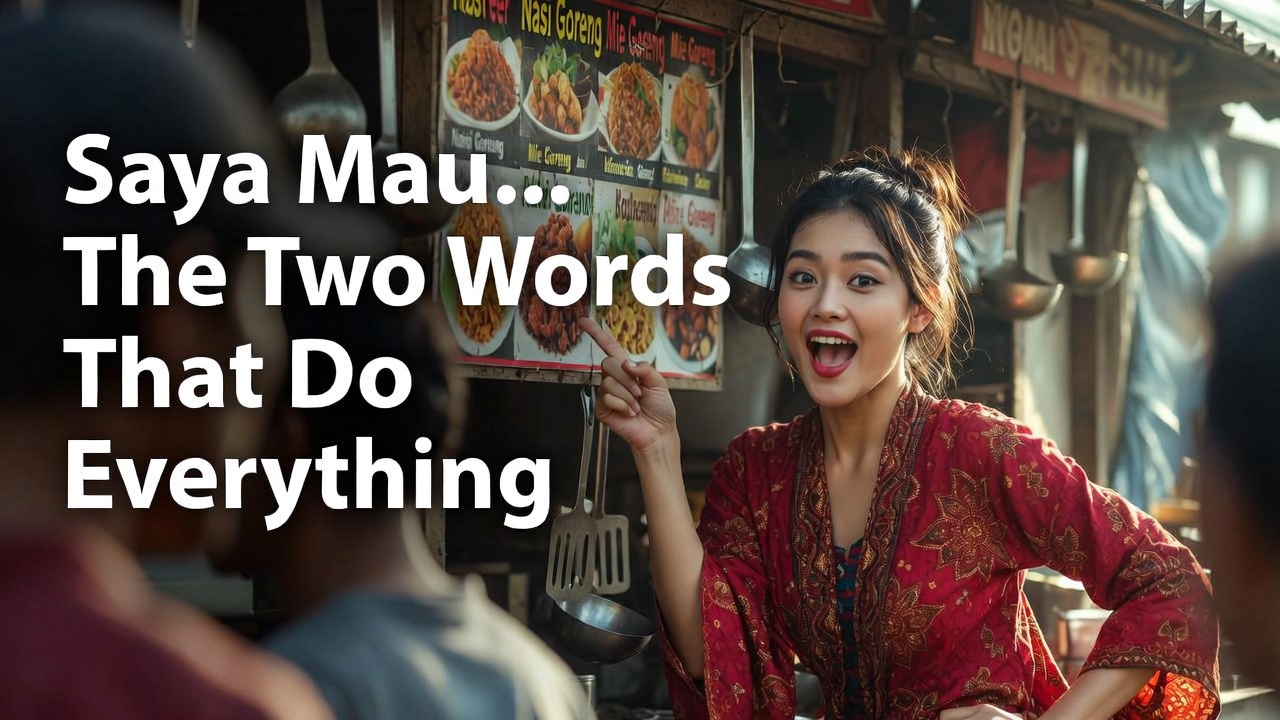
Ah, "Saya Mau"—what a gem of a phrase for anyone diving into Indonesian! If you're a beginner learning Bahasa Indonesia, this simple two-word combo (which means "I want" or "I will") is like your trusty Swiss Army knife. It's versatile, easy to use, and pops up everywhere from street markets to fancy hotels. No wonder it's the ultimate starter for getting what you need in everyday situations. In this article, we'll unpack how "Saya Mau" can handle almost anything, with plenty of examples, tips, and cultural nuggets to make your learning journey even more fun. Let's turn this phrase into your secret weapon!
Saya means "I" (pronounced "SAY-ah"), and mau means "want" or "will" (pronounced "MA-oo," like "how" but with a softer 'm'). Together, they form a powerhouse that lets you express desires without the fuss of complicated grammar. Whether you're ordering your first nasi goreng or negotiating a taxi ride, "Saya Mau" keeps things straightforward and polite. It's especially handy for English speakers because it's so direct—much like saying "I want" in English, but with that warm Indonesian flair that makes conversations flow smoothly.
Why 'Saya Mau' Is Your Go-To Phrase
Before we jump into the scenarios, let's talk about why "Saya Mau" is such a superstar in Indonesian. Indonesian grammar is refreshingly simple—no verb conjugations, no genders, and flexible word order. That means you can slap "Saya Mau" at the front of almost any sentence and bam! You're communicating effectively. For beginners, this phrase is a confidence booster because it's forgiving and widely understood across Indonesia's diverse regions.
Imagine you're in Jakarta, surrounded by the hustle of vendors and traffic. Using "Saya Mau" shows you're eager to engage without sounding demanding. Plus, it's a great way to practice the polite "Saya" (formal "I") instead of the more casual "Aku," which might come off as too familiar in new interactions. If you're aiming to sound friendly and respectful, stick with "Saya Mau" until you get the hang of social nuances.
For more on basic sentence structure, check out Lesson 5.1 in our modules, where we break down how Indonesian verbs work their magic.
Pronunciation Guide
Getting the pronunciation right is key to making "Saya Mau" sound natural. Let's break it down:
- Saya: Pronounced "SAY-ah." The "S" is soft, like in "see," and the "ya" ends with a quick, open "ah" sound. Think of it as saying "say" and then adding a gentle "ah."
- Mau: Pronounced "MA-oo." The "M" is straightforward, and "au" rhymes with "cow" but softer, almost like "ow" in "now." Say it with a slight upward lilt to show enthusiasm.
Practice this phrase out loud: "Saya mau es krim" (I want ice cream, pronounced "SAY-ah MA-oo es krim"). Record yourself using our free audio tools in the site, and compare it to native speakers. Pro tip: Indonesians appreciate when learners try to mimic the melodic rhythm of the language, so don't rush—let it flow!
Ordering Food
Food is at the heart of Indonesian culture, and "Saya Mau" is your best friend when you're exploring warungs (local eateries) or high-end restaurants. Indonesia's cuisine is a vibrant mix of spices, flavors, and regional specialties, so using this phrase helps you dive right in without missing a beat.
Let's expand on some examples:
- Saya mau nasi goreng – I want fried rice (Pronounced: "SAY-ah MA-oo NAH-see goh-REE-ung"). This is perfect for a quick meal. Picture yourself at a bustling night market in Bali: the smoky aroma of nasi goreng wafts through the air. You point to the sizzling wok and say this phrase—voila, you're set for a delicious adventure.
- Saya mau minum kopi – I want to drink coffee (Pronounced: "SAY-ah MA-oo mee-NOOM KO-pee"). Coffee culture is huge in Indonesia, from robust Javanese brews to iced lattes in urban cafes. Use this when you're at a coffee shop in Yogyakarta; it's a great icebreaker to chat with locals about their favorite beans.
To make it even more practical, try adding specifics: Saya mau nasi goreng tanpa telur (I want fried rice without eggs, pronounced "SAY-ah MA-oo NAH-see goh-REE-ung TAN-pa TAY-loor"). This shows how "Saya Mau" can be customized for dietary needs, like avoiding spicy foods in a country where "pedas" (spicy) is a point of pride.
A common scenario: You're at a street food stall and want to try something new. Say, Saya mau sate ayam, tapi tidak terlalu pedas (I want chicken satay, but not too spicy). This not only gets you what you want but also respects the vendor's expertise. Watch out for the common mistake of forgetting "tidak" (not)—saying just "Saya mau pedas" could lead to a fiery surprise!
Fun with Indonesian collects all of it — phrases, pronunciation, and culture — into one guide you can carry.
For cultural insight, Indonesians often share meals communally, so using "Saya Mau" can lead to fun exchanges. If you're invited to a family gathering, this phrase might spark stories about local recipes. Head over to Lesson 6.5 for more food-related phrases to elevate your ordering game.
Getting Around
Transportation in Indonesia is an adventure, from ojek (motorcycle taxis) to angkot (minivans), and "Saya Mau" makes navigating it a breeze. This phrase helps you express destinations clearly, whether you're hopping on a ferry in Sumatra or bargaining for a ride in Jakarta's traffic jams.
Here are a few expanded examples:
- Saya mau ke bandara – I want to go to the airport (Pronounced: "SAY-ah MA-oo kuh ban-DA-ra"). Use this when you're in a Grab car or hailing a taxi. In a country with over 17,000 islands, airports are gateways to exploration—add details like Saya mau ke bandara pukul 8 (I want to go to the airport at 8 o'clock) to specify time.
- Saya mau ke pantai – I want to go to the beach (Pronounced: "SAY-ah MA-oo kuh pahn-TIE"). Beaches are Indonesia's pride, from Bali's surf spots to Lombok's hidden coves. A practical tip: In tourist areas, drivers might suggest alternatives, so be ready to say Saya mau ke pantai yang tenang (I want to go to a quiet beach) for a personalized touch.
Real-world scenario: You're exploring Jakarta and need to get to a museum. Say Saya mau ke Monas (I want to go to Monas, the National Monument). This keeps things simple, but remember, politeness goes a long way—smile and use "terima kasih" (thank you) afterward. A common mistake is mixing up "ke" (to) with other prepositions; stick to it for directions to avoid confusion.
Culturally, Indonesians value patience in travel, so "Saya Mau" paired with a relaxed attitude can turn a routine ride into a friendly chat. Compare this to English: While we might say "I need to go to...," "Saya Mau" feels more about desire, making it less abrupt. For more travel tips, dive into Lesson 7.3, which covers transportation vocabulary.
Shopping
Shopping in Indonesia is a sensory delight, from bustling markets like Pasar Baru in Jakarta to air-conditioned malls in Surabaya. "Saya Mau" shines here, helping you express interest in items without committing, which is key in a haggling culture.
Expanded examples:
- Saya mau beli ini – I want to buy this (Pronounced: "SAY-ah MA-oo BEH-lee EE-nee"). Point to a batik shirt or fresh fruit and use this to start negotiations. In markets, vendors expect banter, so follow up with Berapa harganya? (How much is it?).
- Saya mau coba – I want to try (Pronounced: "SAY-ah MA-oo CHO-ba"). This is ideal for trying on clothes or sampling spices. Scenario: At a batik stall, say this to try different patterns, then decide—it's a polite way to engage without pressure.
Practical usage: If you're at a souvenir shop, combine it with Saya mau coba ukuran besar (I want to try the large size). Avoid the mistake of saying "Saya mau" too forcefully; in Indonesian culture, softening your tone shows respect. A comparison table might help:
| Phrase | Usage Scenario | Politeness Level | Best For |
|---|---|---|---|
| Saya Mau Beli | Buying items directly | Medium | Markets, stores |
| Saya Mau Coba | Trying before buying | High | Clothing, food |
| Aku Pengen Beli | Casual wanting (less formal) | Low | Friends, family |
This table highlights how "Saya Mau" strikes a balance. For deeper shopping lingo, check out Lesson 7.6.
Hotels
Staying in Indonesian hotels, from budget homestays to luxury resorts, becomes effortless with "Saya Mau." It's your key to smooth check-ins and requests, reflecting the country's renowned hospitality.
Examples:
- Saya mau check-in – I want to check in (Pronounced: "SAY-ah MA-oo CHECK-in," often using the English word). Use this upon arrival; in places like Bali, staff might respond in English, but practicing Indonesian builds rapport.
- Saya mau sewa kamar – I want to rent a room (Pronounced: "SAY-ah MA-oo SUH-wa KAH-mar"). Great for homestays; add Saya mau kamar dengan AC (I want a room with AC) for comfort.
Scenario: You're at a guesthouse in Yogyakarta and want extras—say Saya mau sarapan pagi (I want breakfast in the morning). Cultural insight: Indonesians prioritize guest comfort, so using "Saya Mau" courteously can lead to upgrades or recommendations. Watch for the error of omitting "Saya" in formal settings; it might seem rude.
The Negative: Saya Tidak Mau
Not everything is about what you want—sometimes you need to say no, and Saya tidak mau (I don't want, pronounced "SAY-ah tee-DAK MA-oo") is your polite out.
Expanded examples:
- Saya tidak mau pedas – I don't want spicy (Pronounced: "SAY-ah tee-DAK MA-oo PUH-dahs"). Essential for spice-sensitive folks; in a Padang restaurant, this ensures your meal is mild.
- Saya tidak mau makan daging – I don't eat meat (Pronounced: "SAY-ah tee-DAK MA-oo MAH-kan DAH-ging"). Perfect for vegetarians; Indonesia's rich plant-based options make this easy.
Tip: Use it gently to avoid offending—Indonesians might offer alternatives, turning a decline into a positive exchange. For more on negatives, explore Lesson 12.1.
Common Mistakes to Avoid
Even with a simple phrase like "Saya Mau," slip-ups happen. One biggie is overusing it without context, which can sound abrupt. Instead, pair it with smiles and follow-ups. Another? Mispronouncing "mau" as "mow" like a cat—stick to the soft "oo" sound.
Variations and Alternatives
While "Saya Mau" is versatile, mix it up with Saya ingin (I want, more formal) for variety. A quick comparison:
| Phrase | Meaning | When to Use | Formality |
|---|---|---|---|
| Saya Mau | I want/will | Everyday, casual | Medium |
| Saya Ingin | I want (desire) | Formal requests | High |
| Aku Mau | I want (informal) | With friends | Low |
Everyday Practice Scenarios
Ready to level up? Try using "Saya Mau" in role-plays: Order food virtually or plan a pretend trip. Grab your notebook, jot down phrases, and start chatting with language partners. Who knows? Your next Indonesian adventure might just begin with these two words. Keep practicing—it's the fun way to mastery!