
Moving to Bali? 25 Indonesian Phrases You Need Before You Land
So you've made the decision. You're moving to Bali—maybe as a digital nomad chasing those dreamy coworking spots in Canggu, or perhaps for a fresh start amid the island's vibrant culture and stunning beaches. Welcome to the club! As an expat myself, I can tell you that diving into Bali's expat scene is thrilling, but here's the insider secret most guides skip: learning even a handful of basic Indonesian phrases will completely transform your experience. It opens doors to genuine connections with locals, helps you haggle at markets, and makes everyday interactions way more fun. Think about it—while English is widely spoken in tourist hubs, venturing off the beaten path (or just chatting with your warung owner) will feel a million times smoother with a few key words. Plus, as a beginner traveler or digital nomad, you'll stand out as someone who's truly engaging with Balinese culture.
In this guide, we'll cover 25 essential Indonesian phrases to get you started, grouped into handy categories. We'll dive deeper into pronunciation, practical usage, common mistakes to avoid, and even some cultural insights to make your transition seamless. These aren't just words; they're your ticket to feeling at home in Bali. And remember, if you're looking to build on this, check out our Greetings & Basics module for a structured introduction—it's perfect for expats just like you!
Why Learn Indonesian for Bali?
Before we jump into the phrases, let's talk about why this matters. Bali isn't just a paradise of beaches and volcanoes; it's a melting pot of cultures where Indonesian (or Bahasa Indonesia) blends with local Balinese dialects. While many locals in tourist areas speak English, using Indonesian shows respect and effort, which can lead to warmer interactions and even better deals. For digital nomads, it's a game-changer for networking or negotiating rentals. According to expat surveys, learners often report feeling more integrated after just a few weeks.
One practical tip: Indonesians appreciate politeness, so always pair phrases with a smile and eye contact. A common mistake? Mixing up formal and informal language—Indonesian has levels of politeness, especially in Bali's community-oriented society. For instance, using "tolong" (please/help) casually can build rapport, but overusing it might come off as overly demanding. To compare, here's a quick table of formal vs. informal greetings:
| Phrase | Informal Usage | Formal Usage (e.g., with elders) |
|---|---|---|
| Selamat pagi | Quick "good morning" to friends | Add "pak" or "ibu" for respect, like "Selamat pagi, Pak!" |
| Apa kabar? | Casual check-in with neighbors | Use with a slight bow in traditional settings |
| Terima kasih | Everyday "thank you" | Follow with "sangat" for emphasis, like "Terima kasih banyak" |
This will help you navigate social nuances as a beginner. Now, let's get to the essentials!
The Daily Essentials
Starting your day in Bali with a friendly greeting can set a positive tone, whether you're grabbing a coffee in Ubud or heading to a yoga class. These phrases are the building blocks of everyday conversation, and they're easy for beginners to pick up. Let's expand on them with pronunciation guides, real-life scenarios, and tips to avoid pitfalls.
Pronunciation Tips for Beginners
Indonesian is phonetic, which means it's pronounced as it's written—music to the ears of expats! For example, "selamat" sounds like "suh-lah-maht," with a soft "h" at the end. Practice slowly, and don't worry about perfection; locals love the effort.
- Selamat pagi / siang / sore / malam -- Good morning / afternoon / late afternoon / evening
Pronunciation: Suh-lah-maht pah-gee / see-ahng / sor-eh / mah-lahm
In practice: Use "Selamat pagi" when greeting your homestay host at sunrise. It's a cultural norm in Bali to start interactions with greetings, reflecting the island's emphasis on harmony. Scenario: You're at a warung (street food stall) and say, "Selamat siang!" to the vendor—this might earn you a bigger smile and a fresh banana fritter. Common mistake: Forgetting the time-specific version; saying "Selamat pagi" at night could confuse folks, so stick to the right one. For more on greetings, check out Lesson 1.1 in our course.
- Apa kabar? -- How are you?
Pronunciation: Ah-pah kah-bar?
This isn't just small talk; it's a way to show interest in someone's well-being, aligning with Bali's community spirit. Scenario: Ask your driver, "Apa kabar?" during a trip to the rice terraces, and they might share local stories. Response tip: Follow up with "Baik-baik saja" if you're good.
- Baik-baik saja -- I'm fine
Pronunciation: Bigh-bigh sah-jah
Expand this by adding "Terima kasih" (thank you) to make it "Baik-baik saja, terima kasih!" for politeness. Cultural insight: In Bali, people often respond with more than just "fine"—they might say "Alhamdulillah" if they're Muslim, blending in religious elements.
- Terima kasih -- Thank you (literally "receive love")
Pronunciation: Tuh-ree-mah kah-sih
Usage: Always say this after a meal or help; it's heartfelt. Scenario: After bargaining at a market, thank the seller to seal the deal amicably. Avoid the mistake of saying it too formally in casual chats.
- Sama-sama -- You're welcome (literally "same-same")
Pronunciation: Sah-mah sah-mah
This phrase embodies the mutual respect in Indonesian culture. Tip: Use it after helping someone, like directing a lost tourist.
- Tolong -- Please / Help
Pronunciation: Toh-lohng
Practical tip: In emergencies, pair it with "tolong, saya butuh bantuan!" (I need help). Scenario: At a busy market, say "Tolong" to get through a crowd.
- Maaf -- Sorry / Excuse me
Pronunciation: Mah-af
Insight: Apologizing quickly diffuses tension, especially in Bali's traffic jams. Scenario: Bump into someone on a crowded street in Kuta and say "Maaf!"
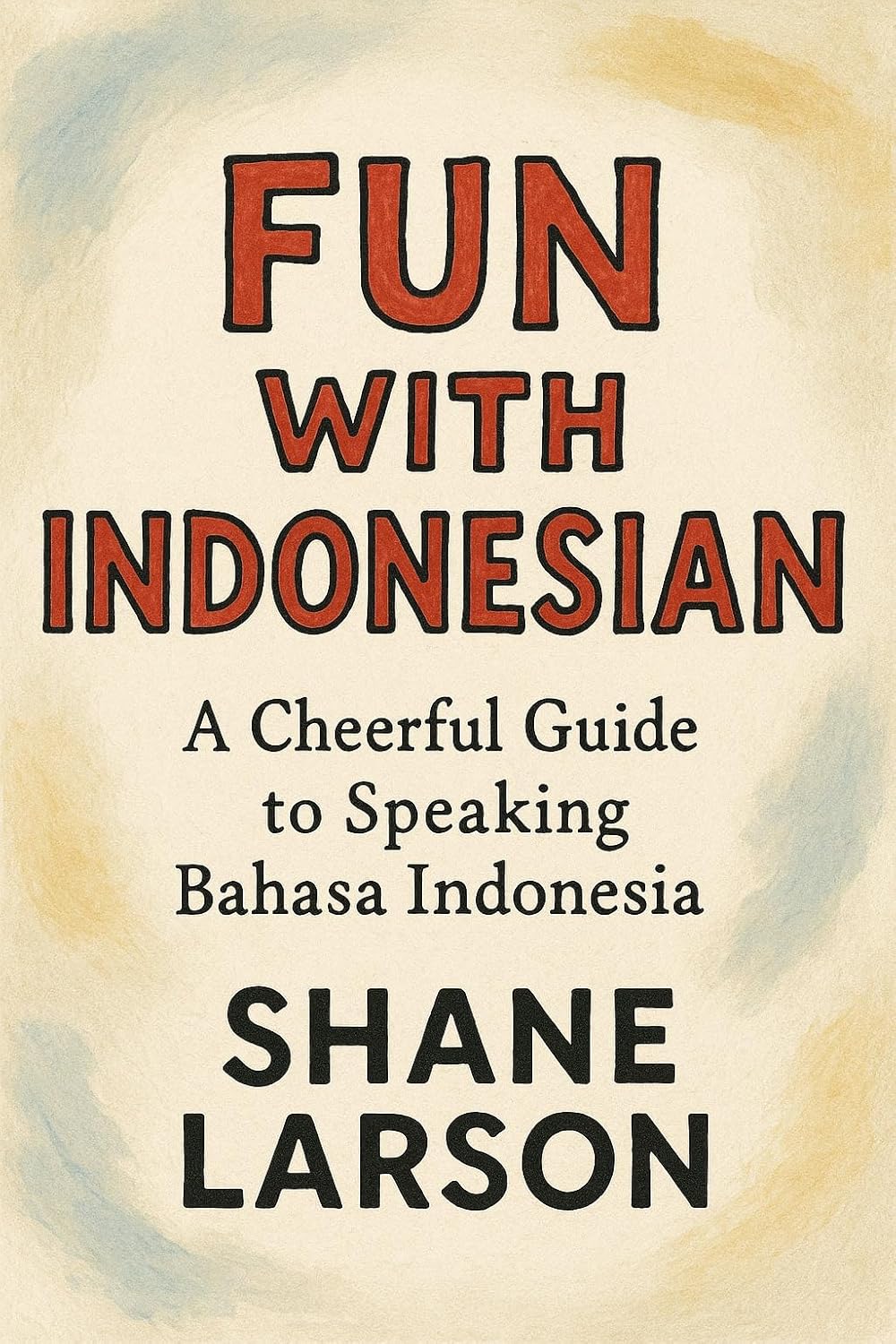
Fun with Indonesian collects all of it — phrases, pronunciation, and culture — into one guide you can carry.
- Permisi -- Excuse me (passing by)
Pronunciation: Pur-mee-see
Usage: Great for navigating Bali's narrow paths. Common mistake: Confusing it with "maaf"; use "permisi" for attention, not apologies.
Introductions
Making introductions is key for expats building a network in Bali. These phrases help you connect at co-working spaces or community events, and they're a step toward deeper cultural immersion.
Building Connections as a Digital Nomad
In Bali's expat hubs, introducing yourself in Indonesian can spark friendships. Remember, Indonesians value humility, so keep it light and friendly. For more on self-introductions, dive into Lesson 3.1.
- Nama saya [name] -- My name is...
Pronunciation: Nah-mah sah-yah [name]
Scenario: At a Balinese ceremony, say "Nama saya John" to join in. Tip: Follow with "Saya dari [country]" for context.
- Saya dari Amerika / Australia / Inggris -- I'm from...
Pronunciation: Sah-yah dah-ree Ah-meh-ree-kah / Ah-strah-lee-ah / Ing-gris
Cultural tip: Sharing your origins often leads to questions about your home, fostering conversations.
- Saya sedang belajar bahasa Indonesia -- I'm learning Indonesian
Pronunciation: Sah-yah suh-dang buh-lah-jahr bah-hah-sah In-do-nay-zhah
This "magic phrase" as we called it, is a humble brag that endears you to locals. Scenario: Use it in a language exchange to practice.
- Saya tinggal di Bali -- I live in Bali
Pronunciation: Sah-yah ting-gal dee Bah-lee
Insight: This shows commitment; locals might invite you to events. Avoid saying it too soon to prevent sounding presumptuous.
Getting Around Bali
Bali's roads can be an adventure with scooters and traffic, so mastering these phrases will make taxis, rideshares, and explorations easier. As a traveler, you'll appreciate how they enhance your independence.
Navigating Like a Pro
Pro tip: Use Google Translate as a backup, but practicing these will build confidence. For directions vocabulary, check Lesson 5.1 and 5.2.
- Saya mau ke... -- I want to go to...
Pronunciation: Sah-yah mah-oo kuh...
Scenario: Tell your driver, "Saya mau ke Pantai Kuta" (I want to go to Kuta Beach).
- Di mana...? -- Where is...?
Pronunciation: Dee mah-nah...?
Usage: Ask "Di mana toilet?" (Where is the toilet?) at a restaurant.
- Dekat / Jauh -- Near / Far
Pronunciation: Duh-kaht / Jah-oo
Tip: Use in responses, like "Apakah dekat?" (Is it near?).
- Berapa lama? -- How long?
Pronunciation: Buh-rah-pah lah-mah?
Scenario: For a trip, ask "Berapa lama ke airport?" (How long to the airport?).
- Belok kiri / kanan -- Turn left / right
Pronunciation: Buh-lohk kee-ree / kah-nahn
Practical: Guide your driver verbally.
- Berhenti di sini -- Stop here
Pronunciation: Bur-hen-tee dee see-nee
Insight: Be polite by adding "Tolong" beforehand.
Food & Drink
Bali's cuisine is a highlight—think spicy satay and fresh tropical fruits. These phrases will help you order like a local and avoid culinary mishaps.
Savoring Balinese Flavors
Food is central to Balinese culture, often tied to rituals. For recipes and food vocab, explore Lesson 7.1.
- Saya mau... -- I want...
Pronunciation: Sah-yah mah-oo...
Scenario: Say "Saya mau nasi goreng" at a warung.
- Nasi goreng / Mie goreng -- Fried rice / Fried noodles
Pronunciation: Nah-see go-reng / Mee go-reng
Tip: Customize with "Tidak pedas" if you're not into spice.
- Tidak pedas -- Not spicy
Pronunciation: Tee-dahk puh-dahs
Common mistake: Assuming "pedas" means something else; it's crucial for sensitive palates.
- Enak sekali! -- Very delicious!
Pronunciation: Eh-nahk suh-kah-lee!
Usage: Compliment your chef to build rapport.
Expat Survival Phrases
As an expat or digital nomad, these will handle the practicalities of life in Bali, from budgeting to staying connected.
Thriving in Everyday Expats Life
Bali's cost of living is affordable, but smart shopping is key. For bargaining tips, see Lesson 12.4.
- Berapa harganya? -- How much does it cost?
Pronunciation: Buh-rah-pah har-gah-nya?
Scenario: At a market, use this to start negotiations.
- Terlalu mahal -- Too expensive
Pronunciation: Tur-lah-oo mah-hahl
Tip: Follow with a counteroffer, like "Bagaimana dengan 50 ribu?" (How about 50,000 rupiah?).
- Ada WiFi? -- Is there WiFi?
Pronunciation: Ah-dah Wee-Fye?
Insight: Essential for digital nomads; ask at cafes to ensure you can work remotely.
With these phrases in your toolkit, you're all set to dive into Bali's magic. Start practicing today, and watch how it enriches your adventures—grab your phrasebook or head to our modules for more!