
Island Hopping Indonesia: Essential Travel Phrases for Boats, Ferries & Flights
Indonesia is an archipelago of over 17,000 islands, which means getting from place to place often involves boats, ferries, and short domestic flights. Whether you're catching a slow ferry from Bali to Lombok, a speedboat through the Komodo islands, or a budget flight to Sulawesi, knowing the right Indonesian phrases will transform your travel experience from stressful pointing-and-guessing into confident, smile-filled conversations with locals.
This guide goes beyond basic vocabulary lists to give you the phrases, pronunciation, cultural context, and real-world tips you need to navigate Indonesian transit like a seasoned traveler.
Boat & Ferry Vocabulary
Indonesia's inter-island ferries range from massive state-run PELNI ships that crisscross the archipelago over multiple days, to small wooden boats that hop between neighboring islands. Here's the vocabulary you'll encounter at every port.
Kapal (KAH-pahl) — Ship or boat. This is the general word for any vessel. You'll see it on signs, schedules, and tickets everywhere. A small fishing boat and a massive cargo ship are both "kapal."
Kapal feri (KAH-pahl FEH-ree) — Ferry. The word "feri" is borrowed directly from English, which makes it easy to remember. Most inter-island routes in popular tourist areas are served by kapal feri.
Pelabuhan (peh-lah-BOO-hahn) — Port or harbor. When asking for directions, "Di mana pelabuhan?" (Where is the port?) will get you pointed in the right direction. Major ports like Merak (Java), Gilimanuk (Bali), and Padangbai (also Bali) are busy hubs where knowing this word is essential.
Tiket (TEE-keht) — Ticket. Another English loanword that makes your life easier. Ticket offices at ports are usually labeled "loket tiket" (ticket counter).
Jadwal (JAHD-wahl) — Schedule. Ferry schedules in Indonesia can be... flexible. The posted jadwal is a starting point, not a guarantee. More on this in the pro tips below.
Berangkat (beh-RAHNG-kaht) — Depart. You'll see this on departure boards and hear it announced (sometimes) before a boat leaves. "Jam berangkat" means departure time.
Tiba (TEE-bah) / Sampai (SAHM-pie) — Arrive. Both words mean "arrive," but you'll hear "sampai" more often in casual conversation. "Sampai" also means "until," which is why "sampai jumpa" (until we meet again) is the common way to say goodbye.
Booking & Onboard Phrases
These are the sentences you'll actually say out loud at the ticket counter, on the dock, or while onboard. Practice them before you arrive at the port — things move fast and ticket sellers aren't always patient.
At the Ticket Counter
"Saya mau beli tiket ke _island_." (SAH-yah MOW BEH-lee TEE-keht keh...) — "I want to buy a ticket to _island_." This is your bread-and-butter sentence. Swap in your destination: "Saya mau beli tiket ke Lombok," "...ke Flores," "...ke Nusa Penida." The structure "saya mau" (I want) followed by a verb is one of the most versatile patterns in Indonesian — you learned it in our At the Market module and it works just as well at a port.
"Kapal berangkat jam berapa?" (KAH-pahl beh-RAHNG-kaht JAHM beh-RAH-pah) — "What time does the boat depart?" Knowing your numbers here is critical. If the answer comes back as "jam delapan pagi" (8 in the morning), you need to recognize "delapan" instantly. This is where the Numbers module pays off.
"Berapa lama perjalanan?" (beh-RAH-pah LAH-mah per-jah-LAH-nahn) — "How long is the journey?" One of the most important questions you can ask. "Berapa lama?" by itself is incredibly versatile — it works for any situation where you need to know a duration. Indonesian concepts of time can be loose, so if someone says "dua jam" (two hours), mentally add 30 minutes to an hour as a buffer.
"Ada kapal lagi hari ini?" (AH-dah KAH-pahl LAH-gee HAH-ree EE-nee) — "Is there another boat today?" Essential when you've just missed one, or when the first departure is already full. "Ada" is one of the most useful words in Indonesian — it means "there is" or "is there?" and works as a one-word question for checking availability of almost anything.
"Berapa harganya?" (beh-RAH-pah har-GAH-nyah) — "How much does it cost?" At smaller ports, prices aren't always posted. At tourist-heavy docks, you might encounter inflated "tourist prices." Asking confidently in Indonesian signals that you know what's up.
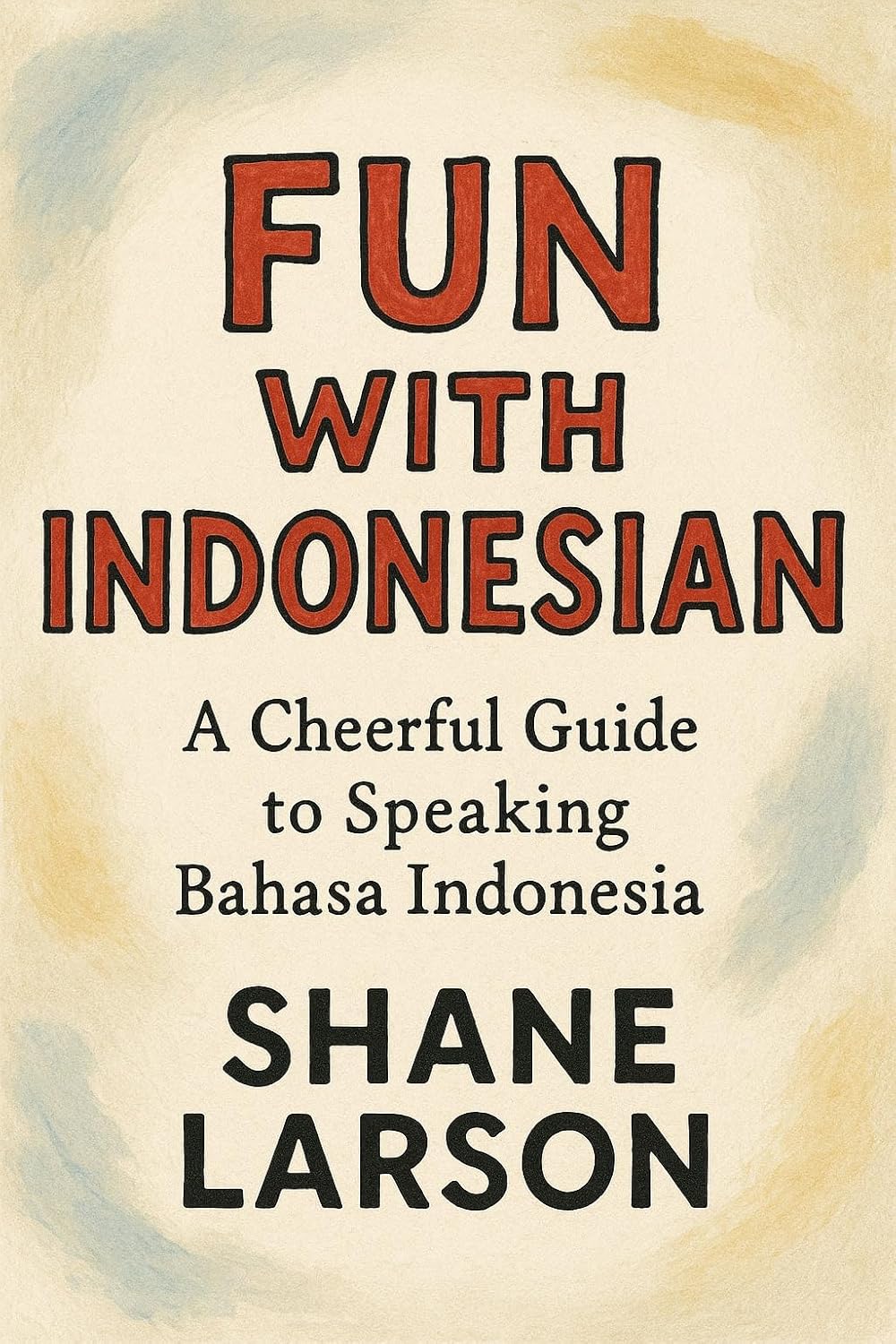
Fun with Indonesian collects all of it — phrases, pronunciation, and culture — into one guide you can carry.
Onboard the Boat
"Saya mabuk laut." (SAH-yah MAH-book LA-oot) — "I'm seasick." Literally "sea drunk" — which is a wonderfully descriptive way to put it. Indonesian seas can get rough, especially during monsoon season (roughly November through March). If you're prone to motion sickness, this phrase might save you. Crew members are generally helpful and may offer you a spot with better airflow or a plastic bag.
"Di mana toilet?" (dee MAH-nah TOY-leht) — "Where is the toilet?" On smaller boats, the answer might be "di belakang" (in the back). On very small boats... the answer might just be the ocean. Good to ask before you board.
"Kapan kita sampai?" (KAH-pahn KEE-tah SAHM-pie) — "When do we arrive?" Useful on longer journeys when you're wondering if you should settle in for a nap or start gathering your bags.
Airport Vocabulary
Domestic flights are often the fastest way to cover long distances in Indonesia. Budget airlines like Lion Air, Citilink, and AirAsia Indonesia connect dozens of cities, and flights are surprisingly affordable. Here's what you need to know.
Bandara (bahn-DAH-rah) — Airport. Short for "bandar udara" (air port, literally). When taking a taxi, "Saya mau ke bandara" (I want to go to the airport) is the sentence you need. In ride-hailing apps like Grab and Gojek, you can just type the airport name, but knowing the word helps when asking locals for directions.
Pesawat (peh-SAH-waht) — Airplane. "Pesawat" is used both for the aircraft itself and casually to refer to a flight. "Saya naik pesawat" means "I'm taking a plane."
Penerbangan (peh-ner-BAHNG-ahn) — Flight. This is the more formal word you'll see on departure boards and tickets. "Penerbangan ke Yogyakarta" = "Flight to Yogyakarta."
Gerbang (GER-bahng) — Gate. Domestic terminals in Indonesia are generally well-signed in both Indonesian and English, but smaller regional airports may be Indonesian-only. Knowing "gerbang" means you can follow the signs without stress.
Bagasi (bah-GAH-see) — Luggage/baggage. Budget airlines in Indonesia often charge separately for checked baggage, so you'll encounter this word when booking. "Bagasi kabin" is carry-on luggage.
Phrases You'll Need at the Airport
"Ada delay?" (AH-dah deh-LAY) — "Is there a delay?" Delays are common on Indonesian domestic flights, especially during rainy season. This quick question gets you the information you need without a long conversation.
"Bagasi saya hilang." (bah-GAH-see SAH-yah HEE-lahng) — "My luggage is lost." Hopefully you'll never need this one, but if you do, head to the "bagasi" counter and say it clearly. "Hilang" means "lost" or "missing" and is a useful word beyond the airport — it works for lost phones, wallets, or anything else that's gone missing.
"Penerbangan saya jam berapa?" (peh-ner-BAHNG-ahn SAH-yah JAHM beh-RAH-pah) — "What time is my flight?" Useful when delays have reshuffled everything and you're not sure what's happening anymore.
"Di mana gerbang _number_?" (dee MAH-nah GER-bahng...) — "Where is gate _number_?" Pair this with your numbers knowledge and you're navigating the airport like a pro.
Getting Around on Land
Once you've arrived at your island destination, you'll need to get from the port or airport to your accommodation. Here are the key phrases that bridge the gap.
"Saya mau ke..." (SAH-yah MOW keh...) — "I want to go to..." This is the single most important travel phrase in Indonesian. Use it with taxi drivers, ojek (motorcycle taxi) riders, or anyone you're asking for help. "Saya mau ke hotel," "Saya mau ke pantai" (I want to go to the beach), "Saya mau ke pusat kota" (I want to go to the city center).
Direction words — When you're in a taxi or on the back of an ojek, you'll need these three words constantly: Kiri (KEE-ree) for left, Kanan (KAH-nahn) for right, and Lurus (LOO-roos) for straight ahead. A common instruction to a driver sounds like: "Lurus terus, nanti belok kiri" — keep going straight, then turn left. In rural areas, landmarks work better than street names: "Lurus sampai warung, lalu belok kanan" (straight until the food stall, then turn right).
"Dekat atau jauh?" (DEH-kaht AH-tow JOW) — "Near or far?" A quick way to figure out if you should walk or grab a ride. Keep in mind that what an Indonesian considers "dekat" (near) might be farther than you expect, especially in sprawling cities. Locals tend to estimate distance in travel time: "dekat, lima menit saja" (near, just five minutes).
Practical Scenarios: Putting It All Together
Here's what a real ferry-booking interaction might sound like at a small port:
> You: "Selamat pagi! Saya mau beli tiket ke Gili Trawangan."
> (Good morning! I want to buy a ticket to Gili Trawangan.)
>
> Ticket seller: "Kapal berangkat jam sepuluh. Dua ratus ribu."
> (Boat departs at ten. Two hundred thousand rupiah.)
>
> You: "Berapa lama perjalanan?"
> (How long is the journey?)
>
> Ticket seller: "Satu setengah jam, kurang lebih."
> (One and a half hours, more or less.)
>
> You: "Oke, satu tiket. Terima kasih!"
> (OK, one ticket. Thank you!)
Notice how the phrases from this guide and from the course modules chain together naturally. "Saya mau" from Module 5, "Berapa" from Module 4, "Terima kasih" from Module 2 — it all connects.
Pro Tips for Indonesian Island Travel
Always confirm schedules locally. Posted schedules online are often outdated. Ask at your hotel the night before: "Kapal ke _island_ berangkat jam berapa besok?" (What time does the boat to _island_ depart tomorrow?). Locals always have the most current information.
Carry cash at remote ports. Card readers are rare outside major tourist hubs. Smaller ports, local ferries, and ojek drivers operate on cash only. ATMs can be unreliable on smaller islands, so withdraw enough before you leave a major town.
Learn your numbers well. Times, prices, distances, durations — everything comes back to numbers. If someone says "tiga puluh ribu" (thirty thousand) for a ticket price, you need to process that in real time. The Numbers module is your best friend here.
"Berapa lama?" is your most important question. It works everywhere: at the port, in a taxi, at a restaurant, waiting for anything. Pair it with patience — remember "jam karet" (rubber time), the Indonesian concept that time is flexible and schedules are approximate.
Be flexible — cancellations happen. Rough seas, mechanical issues, not enough passengers — boats get cancelled for many reasons. Don't book tight connections between a ferry arrival and a flight departure. Give yourself a full day of buffer when island hopping.
Book speedboats in advance during peak season. Popular routes like Bali to Gili Islands or between Nusa Penida and Bali sell out during July-August and around Christmas/New Year. Slow ferries almost always have availability, but speedboats are first-come-first-served or bookable online.
Arrive early. "On time" at an Indonesian port can mean anything from 30 minutes early to an hour late. But if you are late, the boat won't wait. Aim to arrive at least 30 minutes before the scheduled departure.
The Magic Phrase
"Maaf, Pak/Bu, bisa bantu saya?"
(mah-AHF, pahk/boo, BEE-sah BAHN-too SAH-yah)
"Excuse me, Sir/Ma'am, can you help me?"
This phrase opens every door in Indonesia. Indonesians are famously generous with their time and will go out of their way to help a traveler — especially one who has made the effort to ask in their language. "Pak" is for men, "Bu" is for women. Starting with "Maaf" (sorry/excuse me) shows politeness, and "bisa bantu saya?" (can you help me?) is disarmingly simple. You'll be amazed at how many people will walk you to the ticket counter, call a friend who speaks better English, or personally escort you to the right dock.
Keep Building Your Travel Vocabulary
The phrases in this article build on the foundations from the course. If you haven't already, work through the Getting Around module to lock in your direction words and key travel structures, and make sure your Numbers are solid — they're the backbone of every transaction and schedule you'll encounter while island hopping.
Indonesia's islands are waiting. With these phrases in your pocket, you're ready to explore them with confidence. Selamat jalan! (Safe travels!)