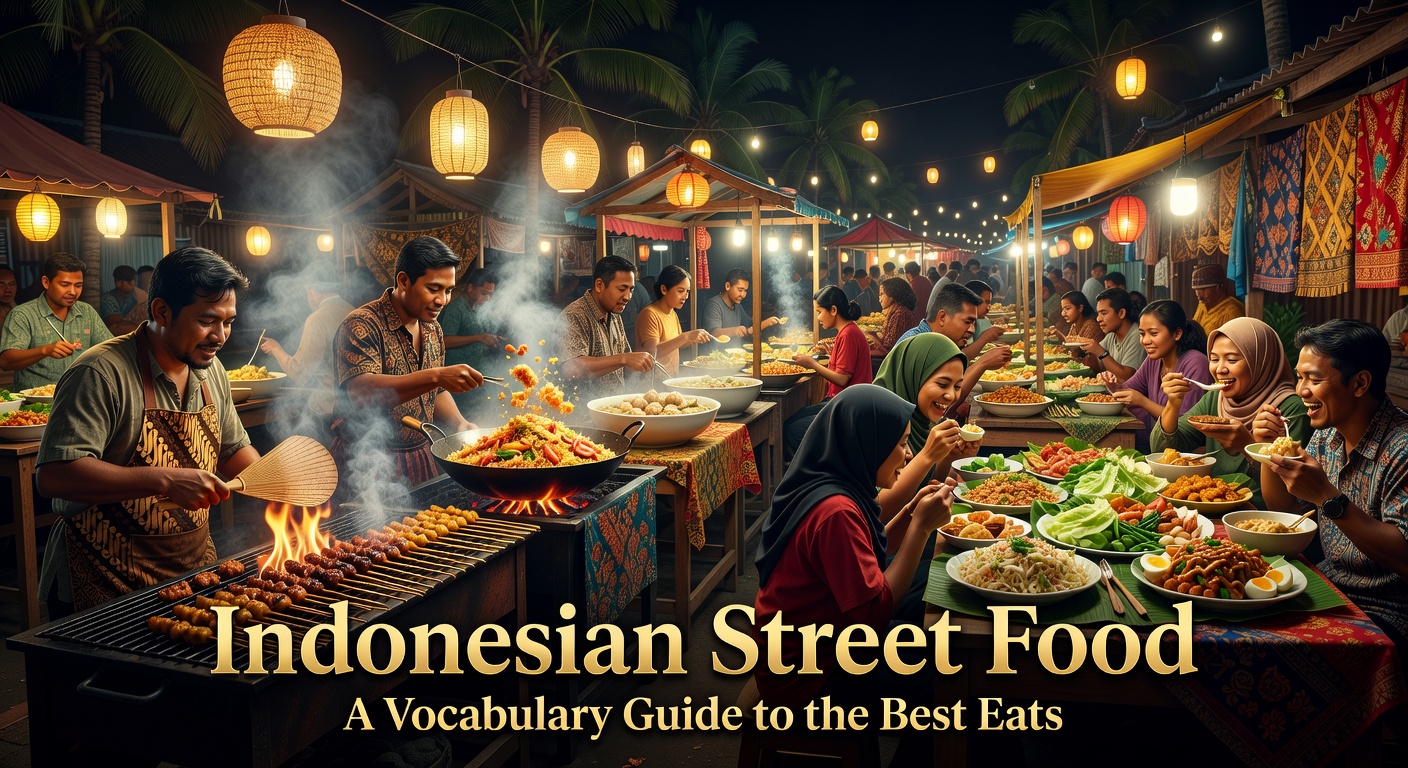
Indonesia's streets are one long, fragrant, delicious classroom. From the sizzle of a satay cart at dusk to the clatter of a bakso vendor's wooden blocks at noon, the country's street food culture is as alive as the language itself. The best part? Ordering is easier than you think — a few well-placed Indonesian words will take you far.
The Classics
Nasi Goreng — Fried Rice
The national dish, and for good reason. Nasi goreng is built on kecap manis — a thick, deeply sweet soy sauce — which gives the rice its characteristic dark color and caramel-edged savoriness. It's topped with a fried egg, a few cucumber slices, and often a handful of shrimp crackers on the side. You'll find it everywhere: late-night street carts, tiny family warung, hotel breakfast buffets. The dish is as variable as whoever's cooking it.
Cultural note: The best nasi goreng uses day-old rice. Freshly cooked rice is too moist and clumps in the wok, so leftovers are the secret ingredient.
Order it: "Saya mau nasi goreng satu." (I want one fried rice.)
Satay (Sate) — Grilled Skewers
Marinated meat threaded onto thin bamboo skewers and grilled over a charcoal fire — the smoke is part of the flavor. Served with a rich peanut sauce (bumbu kacang), sliced raw shallots, fresh chili, and compressed rice cakes (lontong). Every region has its own style: Madura satay is sweet, Padang satay is fiery, Solo satay comes with sweet soy sauce instead of peanut.
Useful vocab: Tusuk means skewer or stick. Ordering "sepuluh tusuk" (ten sticks) is the standard portion at most carts. Common varieties include sate ayam (chicken), sate kambing (goat), and sate sapi (beef).
Order it: "Sate ayam sepuluh tusuk." (Ten chicken skewers.)
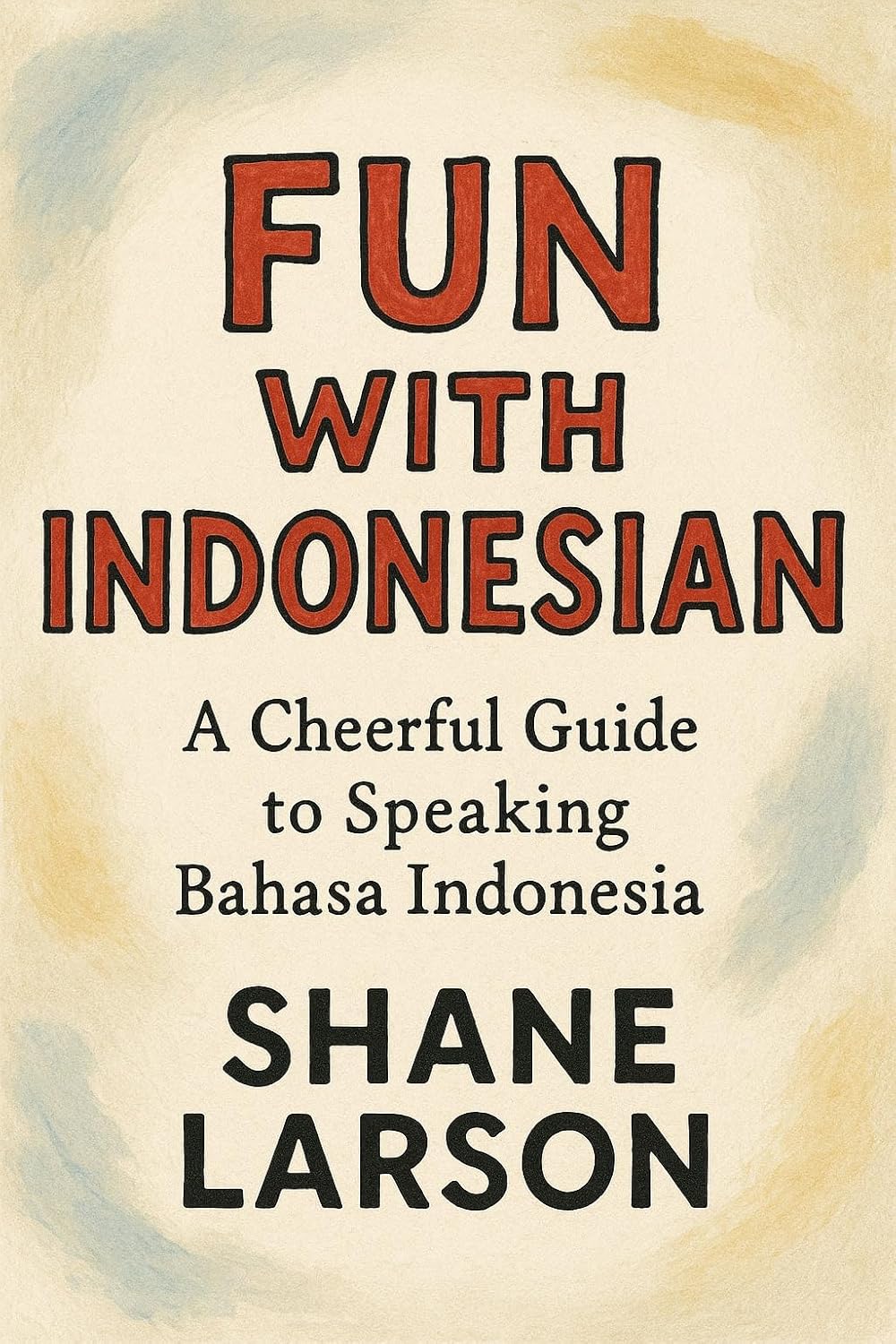
Fun with Indonesian collects all of it — phrases, pronunciation, and culture — into one guide you can carry.
Bakso — Meatball Soup
Springy, dense beef meatballs in a clear, savory broth served with yellow noodles or glass noodles, bean sprouts, fried shallots, and a drizzle of chili sauce. The texture of the meatballs is unique — almost bouncy — because the beef is pounded to a very fine paste before forming. Bakso is comfort food in its purest form.
Cultural note: Learn to recognize the tok tok tok sound — two hollow wooden sticks knocked together. That's a bakso cart passing through your neighborhood. It's one of the most recognizable sounds in Indonesian daily life.
Order it: "Bakso satu mangkuk." (One bowl of bakso. Mangkuk = bowl.)
Gado-Gado — Vegetable Peanut Salad
A hearty composed salad of blanched vegetables — long beans, spinach, bean sprouts, cabbage — alongside boiled potato, hard-boiled egg, tofu, and tempeh, all drenched in a thick freshly ground peanut sauce flavored with lime, palm sugar, and chili. Topped with shrimp crackers for crunch. It's filling, complex, and genuinely one of Indonesia's great dishes.
Good to know: Gado-gado is one of the more reliable vegetarian options at Indonesian street stalls. If you're vegetarian, it's worth confirming the peanut sauce doesn't contain shrimp paste (terasi) — just ask: "Ada terasi?"
Must-Tries
Martabak — Stuffed Pancake
Martabak comes in two completely different personalities. Martabak asin (savory) is a thin, crispy fried dough parcel stuffed with spiced minced meat, egg, and scallions — think a savory crêpe that got deep-fried. Martabak manis (sweet) is a thick, fluffy pancake with a slightly crispy exterior, loaded with butter, sugar, chocolate sprinkles, grated cheese, and crushed peanuts. Martabak stalls typically only open in the evenings and attract long queues for good reason.
Vocab tip: Asin = salty/savory. Manis = sweet. These two adjectives will serve you everywhere in Indonesian food ordering, well beyond martabak.
Pisang Goreng — Fried Banana
A battered, deep-fried banana — crispy outside, soft and caramelized within. The best versions use pisang kepok or pisang raja, varieties that hold their texture under heat and have a natural richness that supermarket bananas can't match. Sold for a few hundred rupiah each, usually eaten as an afternoon snack alongside a glass of sweet tea.
Vocab note: Pisang simply means banana, and it appears across Indonesian menus in many forms: pisang bakar (grilled banana), pisang rebus (boiled banana), kolak pisang (banana cooked in sweet coconut milk). Once you know the word, you'll start spotting it everywhere.
Essential Ordering Vocabulary
- Bungkus — To go / wrapped. Say this at the end of any order and the vendor will pack it up. You'll often be asked: "Makan di sini atau bungkus?" (Eating here or takeaway?)
- Makan di sini — Eat here. The alternative to bungkus.
- Tambah — Add more / extra. "Tambah nasi" = more rice. Invaluable at sit-down warung meals.
- Pedas — Spicy. "Tidak pedas" = not spicy. "Pedas sedikit" = a little spicy. Essential for managing heat levels.
- Berapa semuanya? — How much for everything? You can also just say "berapa?" — vendors will understand.
- Enak! — Delicious! One word that will make any street food vendor's day. Use it sincerely and you might get a bigger portion next time.
Price Reality
Most street food falls between 5,000–25,000 rupiah — roughly $0.30 to $1.50 USD. A bowl of bakso might run 10,000–15,000 rupiah. Ten satay skewers will set you back 15,000–25,000 rupiah. A full martabak manis can reach 30,000–50,000 rupiah but feeds two people comfortably.
As a general rule: street carts are the cheapest, warung (small family restaurants) are a step up, and cafés and restaurants aimed at tourists cost considerably more for the same dish. The cart with the longest queue of locals is almost always the right choice.
Dive into food vocabulary in our Food & Drinks module!