
Traveling through Indonesia with children is one of those magical experiences that can turn an ordinary trip into a heartwarming adventure. Indonesians absolutely adore kids — it's like your little ones have a secret superpower that opens doors everywhere you go. From bustling markets in Jakarta to serene beaches in Bali, strangers will smile, wave, offer snacks, and even want to snap photos with your family. This warm hospitality makes family travel here not just doable, but delightful. But let's be real: even in a kid-friendly paradise, you'll need some key Indonesian phrases to handle the everyday challenges of keeping everyone fed, safe, and comfortable. Think of this as your cheat sheet for smoother adventures, whether you're navigating a crowded ferry or ordering at a warung (local eatery). As a beginner, starting with practical words like "anak saya" (my child) can make a big difference, and it's all about building that confidence for family travel in Indonesia.
To get you started, we've pulled together essential phrases from our lessons, with tips on how to use them. And remember, Indonesians appreciate your efforts to speak their language — it's a surefire way to spark friendly conversations and create lasting memories. If you're looking to dive deeper, check out Lesson 9.3 for more on family-related vocabulary.
Talking About Your Kids
One of the quickest ways to connect with locals is by chatting about your children. Indonesians often ask "Berapa anak Anda?" (How many children do you have?), which is their way of showing genuine interest and warmth. This cultural norm stems from Indonesia's strong family-oriented society, where kids are seen as blessings and community treasures. Don't be surprised if this leads to animated discussions or even impromptu playdates!
To make these conversations flow, here's an expanded list of phrases, complete with pronunciation guides and practical usage scenarios. Remember, pronouncing words correctly can help avoid confusion — for instance, stressing the right syllables makes you sound more natural.
- Anak saya (AH-nak SAH-yah) — My child. Use this when introducing your kid, like saying, "Anak saya suka bermain" (My child loves to play). Scenario: At a park, point to your child and say this to strike up a chat with other parents.
- Anak-anak saya (AH-nak-AH-nak SAH-yah) — My children. Great for families with multiple kids; add details like "Anak-anak saya berusia lima dan tujuh tahun" (My children are five and seven years old).
- Anak laki-laki (AH-nak lah-KEE-lah-kee) — Son (boy child). A common topic — Indonesians might share stories of their own sons.
- Anak perempuan (AH-nak puh-REM-poo-ahn) — Daughter (girl child). Pair it with "Anak perempuan saya sangat manis" (My daughter is very sweet) to compliment your child while bonding.
- Anak saya umur [tiga] tahun (AH-nak SAH-yah OO-mur [TEE-gah] TAH-hoon) — My child is [three] years old. Swap in the age as needed. Scenario: When someone asks about your child's age, this keeps the conversation going and shows respect for local customs.
- Bayi (BAH-yee) — Baby. Use it in sentences like "Bayi saya sedang tidur" (My baby is sleeping) to politely explain why you're moving slowly.
Common Mistakes to Avoid
A frequent slip-up for beginners is mixing up "anak" (child) with "balita" (toddlers under five), which might confuse locals. Also, remember that Indonesians use "Pak" (for men) and "Bu" (for women) as respectful titles, so say "Anak saya, Pak?" to make your question friendlier. For more tips on polite introductions, check out Lesson 7.4, which covers basic greetings and family terms.
Food for Kids
Food is at the heart of Indonesian culture, and traveling with kids means you'll be eating your way through amazing flavors — but with a focus on kid-friendly options. Indonesian cuisine can be spicy, so don't hesitate to ask for modifications; locals are incredibly accommodating and will often prepare milder versions just for your little ones. This ties into the cultural emphasis on "hidangan keluarga" (family meals), where sharing food strengthens bonds.
Start by expanding your ordering vocabulary. Here's a fuller list with translations, pronunciation, and ideas for when to use them:
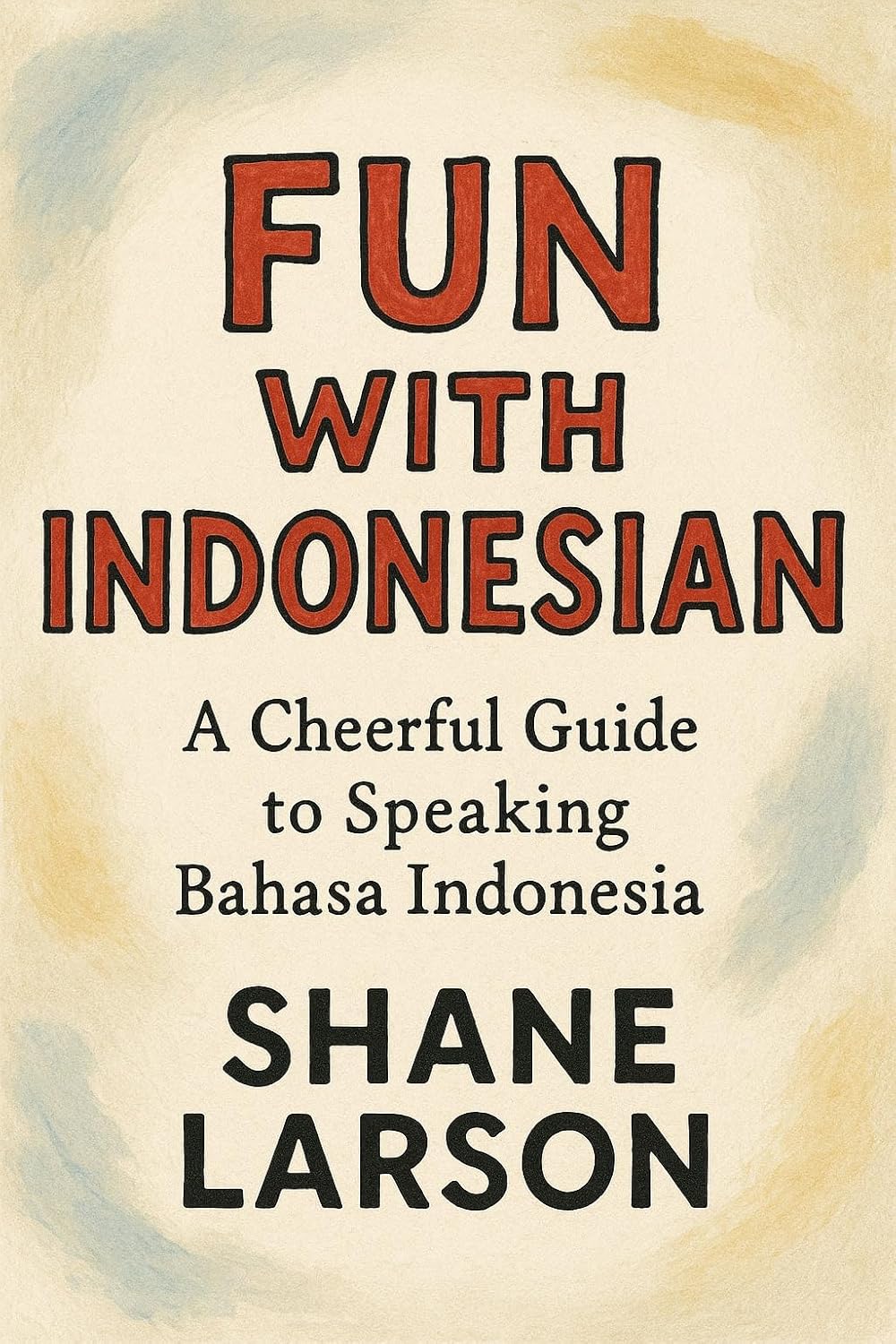
Fun with Indonesian collects all of it — phrases, pronunciation, and culture — into one guide you can carry.
- Ada menu anak? (AH-dah MEH-noo AH-nak?) — Is there a kids' menu? Always a good opener at restaurants.
- Tidak pedas, untuk anak (TEE-dahk PEH-dahs, oon-took AH-nak) — Not spicy, for a child. This is your go-to phrase; pair it with "Mohon buatkan nasi goreng tidak pedas" (Please make fried rice not spicy).
- Nasi putih saja (NAH-see POO-teeh SAH-jah) — Just plain white rice. The ultimate backup for picky eaters; it's mild, filling, and available everywhere.
- Pisang goreng (Pee-SAHNG goh-RENG) — Fried banana. Kids often love this sweet treat; order it as a dessert or snack with "Pisang goreng untuk anak saya, ya" (Fried banana for my child, please).
- Mie goreng tidak pedas (MEE goh-RENG TEE-dahk PEH-dahs) — Fried noodles, not spicy. A fun alternative to rice; add veggies if your child is adventurous.
- Susu (SOO-soo) — Milk. Essential for younger kids; ask for "Susu dingin" (cold milk) at cafes.
- Jus jeruk (Joos JAY-rook) — Orange juice. Fresh and healthy; use it to encourage hydration during hot days.
- Anak saya alergi [kacang] (AH-nak SAH-yah ah-LER-jee [KAH-chahng]) — My child is allergic to [nuts]. Always mention allergies upfront to ensure safety.
Practical Tips for Mealtime
When eating out, try to visit family-run warungs or hotel buffets, which often have kid-sized portions. A cultural insight: In Indonesia, it's common to eat with your hands, but for kids, spoons (sendok) are readily available. Scenario: If your child refuses spicy nasi goreng, switch to mie goreng and watch the smiles. To compare kid-friendly options, here's a quick table:
| Food Item | Why Kids Love It | Cultural Twist | Pronunciation Tip |
|---|---|---|---|
| Pisang goreng | Sweet and crunchy | Often street food, shared joyfully | Stress the 'goreng' sound |
| Nasi putih | Simple and familiar | Staple in every meal | Say it softly for politeness |
| Jus jeruk | Refreshing and natural | Made from local fruits | Emphasize the 'jeruk' |
Avoid the mistake of assuming all fruits are peeled — always ask about preparation. For more on food vocabulary, Lesson 11.2 has great examples.
Safety and Health
Keeping kids safe in a new country is a top priority, and Indonesia's community spirit means you're never alone. Phrases for health and safety help you communicate quickly, drawing on the cultural value of "gotong royong" (mutual assistance). Whether it's a scraped knee or a fever, locals will rally to help.
Expand your toolkit with these additional phrases and scenarios:
- Hati-hati! (HAH-tee-HAH-tee!) — Be careful! You'll use this constantly; yell it near traffic or stairs.
- Jangan! (JAH-ngahn!) — Don't! / Stop! Perfect for preventing mishaps, like "Jangan sentuh itu!" (Don't touch that!).
- Anak saya sakit (AH-nak SAH-yah SAH-kit) — My child is sick. Follow up with specifics for faster aid.
- Anak saya demam (AH-nak SAH-yah deh-MAHM) — My child has a fever. Indonesians might suggest natural remedies like jamu (herbal drinks).
- Di mana dokter anak? (Dee MAH-nah DOHK-ter AH-nak?) — Where is a pediatrician? Ask at hotels or pharmacies.
- Apotek (AH-po-tek) — Pharmacy. They're widespread and stocked with kids' meds.
- Ada obat anak untuk [demam/batuk]? (AH-dah OH-baht AH-nak oon-took [deh-MAHM/Bah-took]?) — Do you have children's medicine for [fever/cough]? Specify clearly.
Cultural Insights and Emergency Tips
In Indonesia, pharmacies often have English-speaking staff, but using basic phrases shows respect. A common mistake is not carrying a translation app as backup — pair it with these phrases for emergencies. Scenario: If your child gets a minor cut, say "Anak saya sakit, ada plester?" (My child is hurt, do you have a band-aid?). For deeper health vocab, Lesson 11.5 is a must.
Daily Needs
From finding restrooms to shopping for essentials, daily phrases keep things running smoothly. Indonesia's infrastructure is improving, with malls and minimarts in urban areas making life easier for parents.
- Di mana toilet? (Dee MAH-nah TOH-let?) — Where is the bathroom? Top priority; add "Untuk anak" for family facilities.
- Ada kamar ganti popok? (AH-dah KAH-mar GAHN-tee POH-pok?) — Is there a diaper changing room? Helpful in public spots.
- Di mana supermarket? (Dee MAH-nah soo-per-MAHR-ket?) — Where is the supermarket? Stock up on supplies.
- Popok (POH-pok) — Diapers. Easily found; ask for sizes like "Popok ukuran kecil" (small size diapers).
- Susu formula (SOO-soo for-MOO-lah) — Formula milk. Available in most stores.
- Kereta dorong (Kuh-REH-tah DOH-rong) — Stroller. If you need to rent one, ask at hotels.
Practical Usage Scenarios
Use "Di mana toilet?" right after arriving anywhere, as kids don't wait! Cultural tip: Public restrooms might be basic, so carry wipes. For shopping, Lesson 5.1 covers directions and daily items.
Accommodation
Finding the right place to stay can make or break your trip. Indonesians prioritize family comfort, with many hotels offering perks for kids.
- Ada kamar untuk keluarga? (AH-dah KAH-mar oon-took kuh-LOO-gahr-gah?) — Do you have a family room? Ask for extras like cribs.
- Bisa tambah tempat tidur anak? (BEE-sah TAHM-bah TEM-paht TEE-dur AH-nak?) — Can you add a child's bed? Common in budget spots.
- Ada kolam renang anak? (AH-dah KO-lam ruh-NAHNG AH-nak?) — Is there a children's pool? A hit for fun family time.
- Aman untuk anak-anak? (AH-mahn oon-took AH-nak-AH-nak?) — Is it safe for children? Always confirm security.
The Cultural Bonus
Indonesia's child-friendly vibe is a game-changer for parents. Restaurants buzz with families, strangers lend a hand, and photo requests are affectionate gestures. This stems from a society where extended families live together, making every child feel supported.
The Phrase That Makes Everything Easier
"Maaf, Pak/Bu, saya bawa anak kecil" (MAH-ahf, PAHk/Boo, SAH-yah BAH-wah AH-nak kuh-CHIL) — Sorry, Sir/Ma'am, I have small children with me. This little gem smooths over any situation, from crowded buses to delayed orders. Slip it into your daily routine, and watch the kindness unfold — it's the ultimate family travel hack in Indonesia. Keep practicing these phrases, and your adventures will be even more memorable!