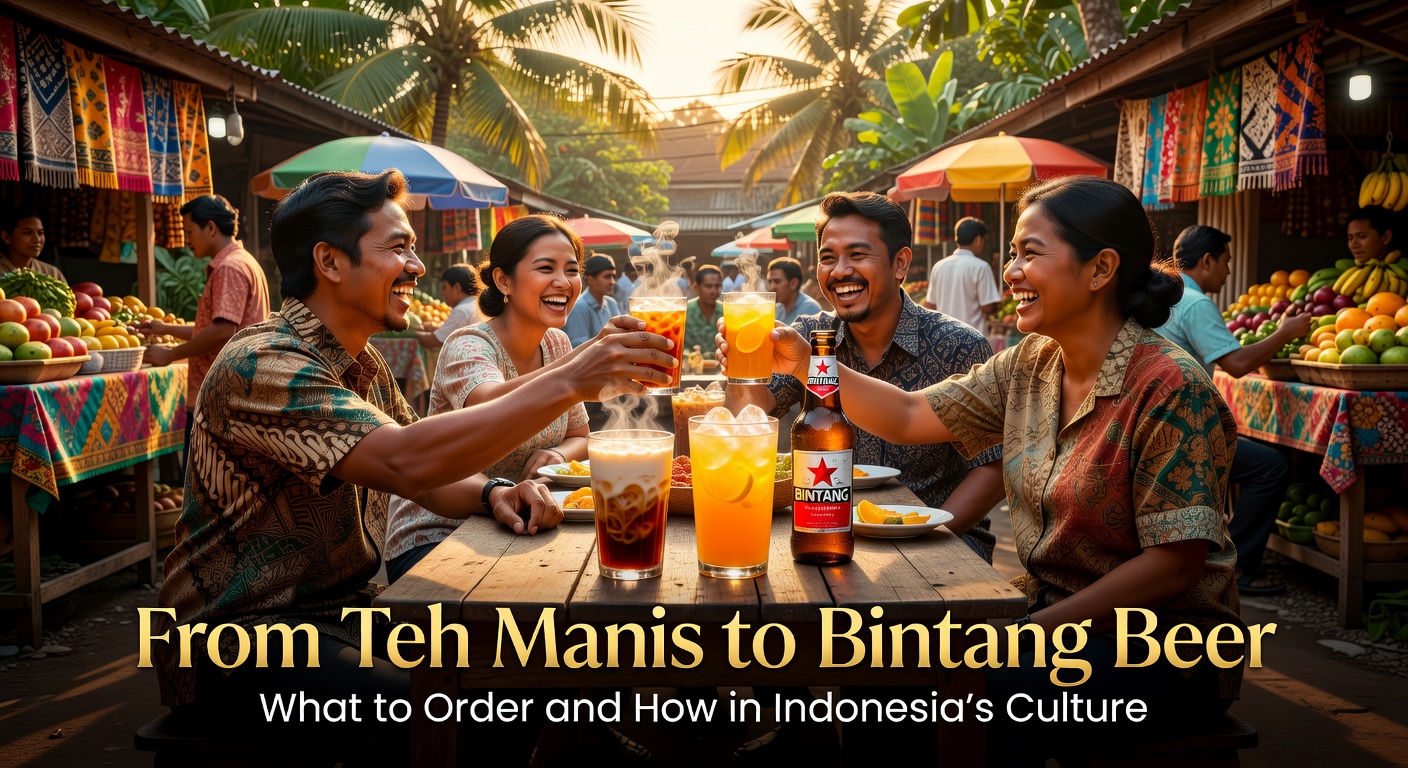
We've already covered Indonesian coffee in a previous article, but let's dive deeper into the vibrant world of Indonesian drinks. From the ultra-sweet teh manis that keeps everyone buzzing to the refreshing es kelapa muda straight from the coconut, Indonesia's drinking culture is a delicious mix of tradition, tropical flavors, and a touch of cultural nuance. Whether you're a traveler sipping on fresh juices at a bustling market or a language learner practicing your ordering skills, these beverages offer a fun way to connect with locals and explore the country. Remember, in Indonesia, a drink is more than just refreshment—it's an invitation to chat, share stories, and embrace the warmth of hospitality. So, grab your phrasebook and let's quench that thirst while picking up some essential vocabulary along the way!
The National Drink: Teh Manis (Sweet Tea)
If coffee is Indonesia's morning pick-me-up, teh manis (pronounced "teh mah-niss," with a soft 'h' sound) is the go-to companion for the rest of the day. This sweet tea isn't just a drink; it's a cultural staple, often served to guests as a sign of welcome and warmth. Imagine sitting in a cozy warung (a small roadside eatery) with a steaming cup of teh manis—it's the perfect excuse to strike up a conversation with your server or fellow patrons. Originating from the Dutch colonial era, when tea was introduced, Indonesians have made it their own by adding generous amounts of sugar, turning it into a sweet, comforting elixir.
To really appreciate teh manis, think about its everyday role: it's not uncommon for Indonesians to enjoy several glasses during meals, as a mid-afternoon boost, or even as a late-night treat. The tea is typically made from black tea leaves brewed strong and then sweetened with palm sugar or refined sugar, sometimes with a hint of milk for creaminess. If you're new to this, start with a small order and savor the balance of earthy tea flavors against the sweetness—it's like a hug in a cup!
Variations and Ordering Tips
Here's where it gets fun—teh manis comes in endless tweaks to suit your mood or the weather. Ordering variations include:
- Teh manis — Sweet tea (hot, the default choice; pronounced "teh mah-niss")
- Es teh manis — Iced sweet tea (perfect for those humid days; "es" means ice, so it's "ess teh mah-niss")
- Teh tawar — Plain tea, no sugar (a lighter option for health-conscious folks; "tawar" means bland or unsalted)
- Es teh tawar — Iced plain tea
- Teh panas — Hot tea (though "panas" just means hot, it's often implied with teh manis)
Practical tip: Indonesian sweet drinks can pack a sugar punch—think two or three spoons per cup! If you're watching your intake, try saying, "Teh manis kurang gula, dong" (Sweet tea with less sugar, please; pronounced "teh mah-niss koo-rang goo-lah, dong"). This polite addition shows respect for local customs while looking out for your health. A common mistake beginners make is assuming "manis" is mildly sweet like in Western teas; it's not—it's delightfully over-the-top. To avoid a surprise, always ask for a taste if you're unsure.
For cultural context, sharing teh manis is a bonding ritual. In a family setting, it's often poured from a shared pot, symbolizing unity. If you're traveling, pair it with some fried snacks like gorengan for an authentic experience. Check out Lesson 5.1 for more on everyday beverages and how they fit into Indonesian social life.
Fresh Juices (Jus)
Indonesia's tropical paradise means fresh juices are a daily delight, bursting with flavors from fruits that grow abundantly year-round. These aren't your store-bought juices; they're freshly squeezed or blended on the spot by street vendors, offering a healthy, refreshing escape from the heat. Drinking jus is a great way to beat the humidity while practicing your Indonesian—plus, it's packed with vitamins that can help you stay energized during your adventures.
Start with the basics: Jus jeruk (orange juice; pronounced "joos jeh-rook") is a zesty favorite, especially in the mornings, while jus mangga (mango juice; "joos mahng-gah") brings that creamy, tropical sweetness. Don't miss jus alpukat (avocado juice; "joos al-poo-kaht"), a unique blend often mixed with chocolate syrup, condensed milk, and ice—it's like a dessert in a glass and a nod to Indonesia's creative fusion of flavors. Other popular options include jus semangka (watermelon juice; "joos seh-mahng-kah") for ultimate hydration and jus nanas (pineapple juice; "joos nah-nahs") for a tangy kick. For variety, try jus campur (mixed fruit juice; "joos chahm-poor"), where vendors mix whatever's fresh.
Practical Usage and Health Tips
When ordering, say something like "Saya mau jus mangga, satu gelas, tanpa gula" (I want one glass of mango juice without sugar; pronounced "sah-yah mah-oo joos mahng-gah, sah-too geh-lahs, tan-pah goo-lah"). This keeps it simple and shows you're engaging with the culture. A practical scenario: At a beachside stall in Bali, order jus jeruk to cool off after swimming—it's a cheap, nutritious way to refuel.
Fun with Indonesian collects all of it — phrases, pronunciation, and culture — into one guide you can carry.
Watch out for common mistakes: Many newcomers add too much sugar by default, but asking for "kurang manis" (less sweet) can prevent that. Health-wise, these juices are loaded with antioxidants—jus alpukat, for instance, is great for heart health—but always opt for vendors with clean setups to avoid any tummy troubles. For a fun comparison, here's a quick table of popular juices:
| Juice Type | Flavor Profile | Best For | Pronunciation Tip |
|---|---|---|---|
| Jus Jeruk | Tart and citrusy | Morning energy boost | Emphasize the 'r' in jeruk |
| Jus Mangga | Sweet and creamy | Afternoon snack | Soft 'ng' sound like in "sing" |
| Jus Alpukat | Rich, milky, with chocolate notes | Dessert alternative | Stress the 'a' in alpukat |
| Jus Semangka | Light and watery | Hydration on hot days | Quick 'ng' at the end |
Explore Lesson 7.3 for more fruit-related vocabulary to enhance your ordering skills.
Coconut Water
Ah, es kelapa muda (young coconut water on ice; pronounced "ess kuh-lah-pah moo-dah")—the ultimate tropical quencher that's as iconic as Bali's beaches. In Indonesia, this isn't just a drink; it's nature's own sports bottle, straight from the coconut. Vendors hack open a fresh young coconut with a machete, insert a straw, and voilà—pure, electrolyte-rich refreshment for around 10,000-15,000 rupiah (about $0.70-1.00 USD).
Culturally, coconut water symbolizes simplicity and abundance in Indonesian life, often enjoyed during festivals or as a roadside treat. It's especially popular in coastal areas like Java or Sumatra, where you'll see families sharing one under the shade. For practical tips, always go for the young, green coconuts for the sweetest taste—older ones can be bland. A usage scenario: After hiking in the mountains, grab one from a vendor; it's a natural way to rehydrate and avoid heat exhaustion. Common mistake: Confusing it with coconut milk (santan), which is thicker and used in cooking—stick to "kelapa muda" for the clear water inside.
Traditional Drinks
Indonesia's traditional drinks are a treasure trove of heritage, blending herbs, spices, and local ingredients for both flavor and health benefits. These aren't just beverages; they're remedies passed down through generations, often tied to regional customs.
Jamu: Herbal Elixirs
Jamu (pronounced "jah-moo") is a traditional herbal drink made from roots like turmeric, ginger, and tamarind, believed to boost immunity and digestion. In Javanese culture, it's a daily ritual for wellness—moms might brew it at home or buy it from jamu sellers. Try "Jamu kunyit asam" (turmeric and tamarind jamu; "jah-moo koon-yit ah-sam") for its anti-inflammatory properties. Ordering tip: Say "Saya mau jamu kunyit, satu botol" (I want one bottle of turmeric jamu).
Iced Delights: Es Cendol and Beyond
Es cendol (shaved ice with green rice flour jelly, coconut milk, and palm sugar; pronounced "ess chen-dol"), also known as es dawet in some regions, is a colorful, cooling treat perfect for hot afternoons. Originating from Java, it's a staple at markets and a fun way to experience Indonesia's sweet tooth.
Other gems include bandrek (hot ginger drink with coconut milk and spices; a Sundanese specialty from West Java), great for warming up on cooler evenings, and wedang jahe (hot ginger drink; "weh-dahng jah-heh"), which fights colds with its spicy kick. Then there's bajigur (hot coconut milk with palm sugar and ginger; "bah-jee-goor"), another West Java favorite for cozy nights.
Cultural insight: These drinks often have spiritual ties, like jamu being used in traditional healing ceremonies. Avoid the mistake of drinking them too quickly—savor them slowly to appreciate the flavors. For recipes, check out Lesson 10.3, where we cover making traditional drinks at home.
Alcohol: The Cultural Context
In Indonesia, alcohol is more than a drink—it's intertwined with cultural sensitivities, especially in this Muslim-majority nation. Approaching it with respect ensures you enjoy it responsibly while honoring local norms.
Where Alcohol Is Available
Bali stands out for its easy access, thanks to its Hindu majority, but in Jakarta, you'll find it in hotels and bars, not minimarkets. In conservative areas like Aceh, it's prohibited, so always gauge the setting.
What to Order and Common Mistakes
Bintang (pronounced "bin-tahng") is the star beer, light and lager-style, perfect for chilling at a beach bar. Try "Anker" for another local brew. For spirits, arak (a potent palm spirit; "ah-rak") is a Balinese specialty, but stick to regulated sources to avoid health risks.
Ordering phrases: "Saya mau Bintang satu, dingin" (I want one cold Bintang; "sah-yah mah-oo bin-tahng sah-too, ding-in"). Cultural rule: Never drink near a mosque or during Ramadan—be discreet and follow your host's lead.
Practical Scenarios and Insights
In a Bali warung, ordering a Bintang might lead to lively chats, but in rural areas, skip it altogether. Compare beers in this table:
| Beer Type | Alcohol Content | Best For | Cultural Note |
|---|---|---|---|
| Bintang | 5% | Relaxed evenings | Iconic green bottle |
| Anker | 4.5% | Casual gatherings | Less common, great alternative |
Lesson 7.4 has more on cultural etiquette for social drinking.
Mastering Drink Temperatures
Indonesia's heat makes cold drinks essential, but knowing the lingo helps. Use "es" for iced, "dingin" for cold, or "tanpa es" if you're wary of ice quality. In cities, it's safe, but in remote spots, ask first. Tip: Order "Es teh manis, ekstra dingin" for an extra-refreshing twist.
How to Order Like a Local
Master the basics with "Saya mau minum [drink], satu" (I want to drink [drink], one). Casually, just reply to "Minum apa?" (What do you want to drink?) with "Es teh manis!" Practice these in real-life scenarios, and you'll be chatting like a pro. Dive into our food and drink module for more vocabulary adventures!