How to Compliment Someone in Indonesian (And Why It Matters)
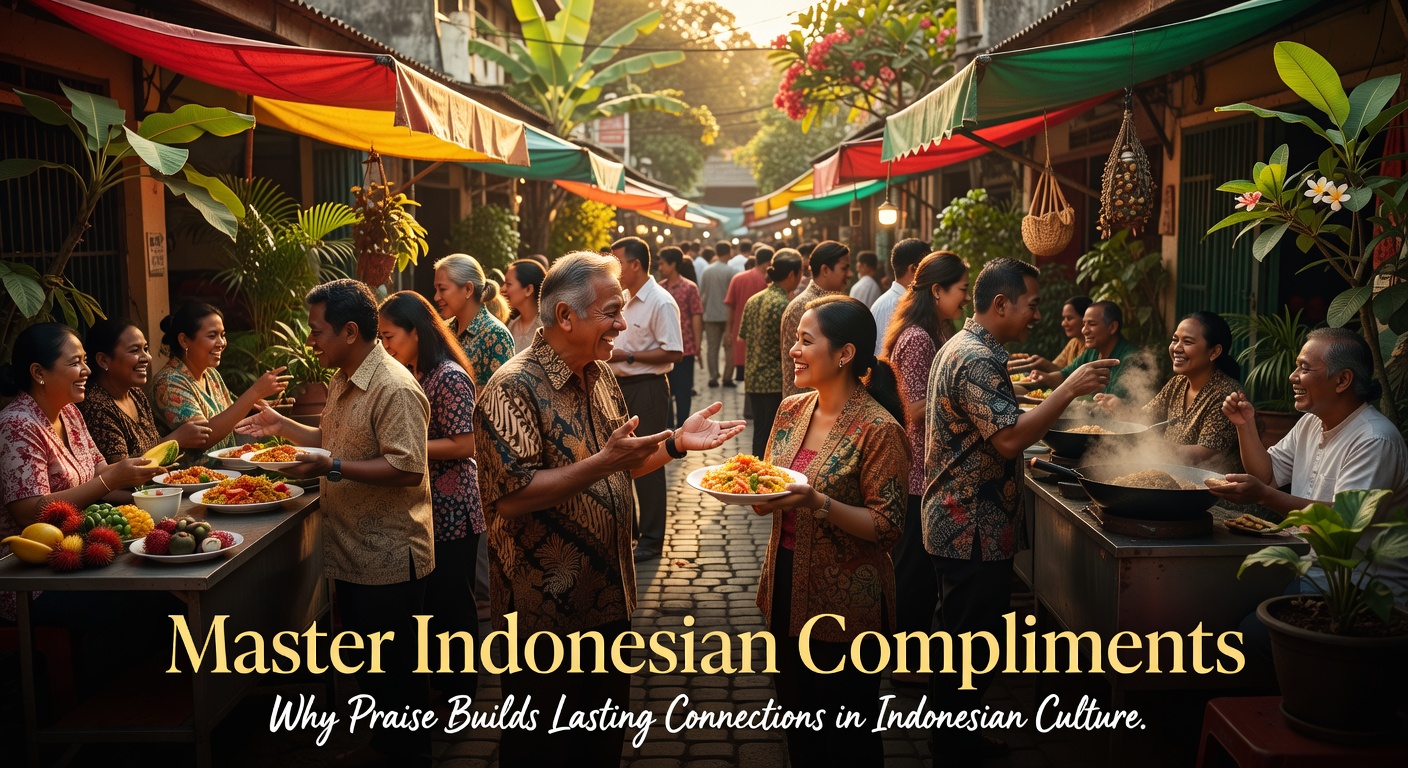
In Indonesia, a well-placed compliment isn't just nice — it's social glue that builds warmth, shows respect, and deepens connections faster than almost anything else you can say. Imagine strolling through a vibrant market in Yogyakarta, sampling fresh satay, and exclaiming "Enak sekali!" to the vendor — suddenly, you're not just a customer, but a welcomed friend who might get an extra skewer or an invitation to chat about local traditions. This cultural norm is deeply rooted in Indonesia's emphasis on harmoni (harmony) and gotong royong (mutual cooperation), where positive words help maintain community bonds and avoid conflict. For English speakers learning Bahasa Indonesia, mastering these phrases isn't just about vocabulary; it's about embracing the heart of Indonesian culture, making your interactions more authentic and enjoyable. Whether you're practicing in our interactive lessons or chatting with locals in places like Bali or Medan, compliments can turn everyday encounters into memorable experiences. And if you're curious about building a strong foundation, check out Lesson 2.1 for more on everyday greetings and social niceties — it's a great starting point!
Compliments in Indonesian are straightforward, heartfelt, and often enhanced with amplifiers like "sekali" or "banget" to convey genuine enthusiasm. They're especially meaningful because Indonesians cherish humility and modesty, so your sincere praise can light up someone's day while demonstrating your appreciation for their way of life. Below, we'll dive deeper into categories of compliments, adding more examples, practical tips, cultural insights, and common mistakes to avoid. This will help you use them effectively, whether you're a beginner or advancing your skills.
The Food Compliments (Most Important Category)
Food is at the heart of Indonesian culture, symbolizing hospitality, family ties, and community spirit. Complimenting someone's cooking isn't just polite — it's like giving a warm embrace, acknowledging the love and effort that goes into preparing meals. This tradition is evident in events like Lebaran feasts, where families gather to share dishes, or in everyday warung visits, where a simple compliment can lead to stories about regional recipes. For beginners, starting with food-related praises is smart because they're universally appreciated and pop up in daily life, from street food stalls to family dinners. Not only does this boost your language skills, but it also helps you connect on a personal level, fostering that all-important harmoni.
Let's expand on some key phrases with pronunciations, translations, and real-life scenarios to make them easier to use. Remember, pairing your words with a smile or a gesture like nodding enthusiastically can make your compliment even more impactful.
- Enak sekali! (EH-nak suh-KAH-lee) — Very delicious! This phrase is your go-to for expressing sheer delight, and it's versatile for everything from a spicy soto to sweet klepon. In a scenario like trying mie goreng at a beachside stall, say it while savoring a bite and watching the cook's face light up — it might even earn you a recipe tip. Cultural insight: In Java, food is tied to santri values, blending spiritual and communal elements, so your praise honors not just the taste but the cultural heritage.
- Masakan Ibu/Pak enak banget! (Mah-SAH-kan EE-boo/PAHK eh-NAK BAHNG-eht) — Your cooking is so delicious! Use "Ibu" for women and "Pak" for men to show respect, especially in home settings. For instance, at a family gathering during Idul Fitri, follow this with a question like, "Apa rahasia resepnya?" (What's the secret recipe?), to keep the conversation flowing. Practical tip: Always be specific — instead of just saying it's good, mention what you love, like "Bumbunya pas sekali!" (The spices are perfect!), to avoid sounding generic.
- Ini makanan terbaik! (EE-nee mah-KAH-nan ter-AY-bah) — This is the best food! Save this for standout moments, such as enjoying a rich rendang at a festival. A common mistake is overusing it; reserve it for truly exceptional dishes to keep your sincerity intact. In practice, during a group meal, this could lead to everyone sharing their favorites, strengthening bonds.
- Lezat! (LUH-zaht) — Tasty or scrumptious. Try it when sampling Balinese lawar: "Makanan ini lezat sekali!" (This food is so tasty!). This word adds variety and shows you're expanding your vocabulary.
- Saya ketagihan! (SAH-yah kuh-TAH-gih-han) — I'm addicted to this! Use it sparingly for something irresistible, like Jakarta's famous martabak, to inject fun and humor into the interaction.
Practical usage: When complimenting food, consider the setting — in more formal dinners, opt for polite phrases, while casual spots allow for playful ones. A common mistake is forgetting to reciprocate; share a compliment about their hospitality or ask for tips to build rapport. For a deeper exploration of Indonesian cuisine and how it ties into conversations, Lesson 5.5 is packed with vocabulary and scenarios that will take your skills to the next level.
To help you choose the right compliment, here's a quick comparison table:
| English Compliment | Indonesian Equivalent | When to Use | Why It Works |
|---|---|---|---|
| "This is delicious!" | Enak sekali! | Any meal, casual or formal | Shows immediate, versatile appreciation and is easy for beginners. |
| "You're a great cook!" | Masakan Anda hebat! | Home-cooked meals | Highlights skill and effort, aligning with Indonesian values of humility. |
| "I love this flavor!" | Rasanya enak banget! | Street food or gatherings | Adds specificity, making your praise feel personal and engaging. |
| "The best I've had!" | Makanan terbaik seumur hidup! | Special occasions | Emphasizes rarity, but use cautiously to avoid exaggeration. |
Appearance Compliments
In Indonesian culture, complimenting appearance is a way to celebrate beauty and style while upholding respect and modesty, often drawing from the country's diverse ethnic influences like Javanese elegance or Balinese artistry. These compliments are lighter and more communal than in Western contexts, focusing on natural features, fashion, or even accessories, but they're used carefully to prevent any hint of flirtation, especially in conservative areas. As an English speaker, think of them as friendly icebreakers that can lead to fun discussions about local trends or traditions.
Fun with Indonesian collects all of it — phrases, pronunciation, and culture — into one guide you can carry.
Here are more expanded examples with pronunciations and tips to help you navigate these waters:
- Cantik sekali! (CHAN-teek suh-KAH-lee) — So beautiful! (for women) Use it in social settings, like admiring a friend's batik dress: "Baju Anda cantik sekali!" (Your dress is so beautiful!). In Bali, you might tie it to nature, saying, "Seperti matahari terbit!" (Like a sunrise!), to add a cultural layer.
- Ganteng banget! (GAHN-teng BAHNG-eht) — So handsome! (for men) Compliment a colleague's look at an event: "Kamu ganteng hari ini!" (You're handsome today!). Practical tip: Follow with a neutral topic, like the event itself, to keep things light.
- Keren abis! (KEH-ren AH-biss) — Super cool or stylish (gender-neutral). Perfect for praising someone's gadget or outfit: "Sepatu kamu keren abis!" (Your shoes are super cool!). This is great for younger crowds and avoids taboos.
- Manis sekali! (MAH-niss suh-KAH-lee) — So sweet or cute. Say it for a charming smile: "Wajah Anda manis sekali!" (Your face is so sweet!). Use this in friendly chats to evoke warmth.
A common mistake is over-complimenting strangers, which might seem invasive; always link it to a shared context, like a festival outfit. For cultural insights, in Sumatra, beauty often reflects ancestral pride, so compliments might reference heritage. ### Tips for Appearance Compliments in Different Regions: In urban Jakarta, they're more casual, while in rural areas, keep them subtle to respect local norms. Check out Lesson 3.5 for more on body language and non-verbal cues that pair perfectly with these phrases.
Character and Skill Compliments
Indonesians place a high value on character traits like kindness and diligence, influenced by principles such as pancasila and local philosophies that promote humility and cooperation. Complimenting someone's skills or personality not only boosts their morale but also reinforces the cultural ideal of malu, encouraging mutual respect and community. These compliments are versatile for friendships, work, or learning, and they can turn a simple chat into a meaningful exchange.
Expand your toolkit with these detailed examples:
- Pintar banget! (PIN-tahr BAHNG-eht) — So smart! Use it after someone explains something helpful: "Kamu pintar banget dalam bahasa!" (You're so smart with languages!). In a study group, this could spark collaborative tips.
- Baik hati sekali! (BAH-eek HA-tee suh-KAH-lee) — So kind-hearted! When someone offers directions, respond with this to show appreciation and perhaps share your own story.
- Hebat luar biasa! (HEH-baht LOO-ahr bee-AH-sa) — Amazingly great! For professional skills: "Kerja Anda hebat luar biasa!" (Your work is amazingly great!). Avoid exaggeration to maintain authenticity.
- Jago betul! (JAH-go buh-TOOL) — Really skilled! Compliment a musician: "Kamu jago betul main gitar!" (You're really skilled at playing guitar!).
Practical tip: Always make your compliment specific, like referencing a recent action, to avoid sounding vague. A common mistake is not following up; use it to ask questions, such as "Bagaimana Anda belajar itu?" (How did you learn that?), to deepen the conversation. For more on positive affirmations and character-building, Lesson 10.1 offers excellent phrases and exercises.
Here's a comparison table to highlight key traits:
| Trait Compliment | Indonesian Phrase | Best Scenario | Cultural Insight |
|---|---|---|---|
| Smart | Pintar sekali! | Learning or problem-solving | Ties into the value of education in a collectivist society. |
| Kind-hearted | Baik hati banget! | Acts of help | Reflects gotong royong, fostering community bonds. |
| Hardworking | Rajin luar biasa! | Work or study settings | Honors perseverance, a key to malu and success. |
| Friendly | Ramah sekali! | Social interactions | Celebrates Indonesia's welcoming nature, enhancing harmoni. |
Complimenting Situations and Places
Compliments aren't just for people — praising situations, events, or locations shows your engagement with Indonesia's rich environment and diverse landscapes, from bustling cities to serene beaches. This category highlights national pride in bhineka tunggal ika (unity in diversity), making it a fantastic way to connect and show your admiration.
For example:
- Bagus sekali! (BAH-goos suh-KAH-lee) — So good or nice! Use it for a home or event: "Rumah Anda bagus sekali!" (Your house is so nice!), which might lead to a tour.
- Pemandangannya indah banget! (Puh-MAN-dang-nya IN-dah BAHNG-eht) — The view is so beautiful! During a trip to Bali, say this while overlooking the rice terraces: "Pemandangannya indah banget di sini!" (The view is so beautiful here!).
Compliments for Travel and Daily Life
Travel scenarios are ideal for these praises. For instance, "Indonesia indah sekali!" (Indonesia is so beautiful!) can spark stories about hidden gems. In daily life, compliment a well-organized market with "Pasar ini bagus!" (This market is great!). Cultural insight: Praising places often acknowledges the hard work behind them, like community clean-ups, reinforcing shared responsibility.
The "Sekali" Amplifier and The Casual Amplifier: Banget
As we've touched on, amplifiers like "sekali" (suh-KAH-lee) add emphasis to your compliments, making them sound more sincere and enthusiastic. For a moderate touch, use it in family settings: "Enak sekali!" For a fun, casual vibe, "banget" (BAHNG-eht) brings youthful energy, perfect for friends: "Enak banget!" Compare them here:
| Amplifier | Formality Level | Example Usage | Best For |
|---|---|---|---|
| Sekali | Moderate | Enak sekali! | Family dinners or polite conversations |
| Banget | Casual | Enak banget! | Outings with friends or young crowds |
How Indonesians Receive Compliments
When you give a compliment, Indonesians might respond with modesty due to malu, often deflecting with phrases like "Ah, tidak juga" (Oh, not really). Gently insist with a smile to keep the positivity flowing, turning it into a warm exchange that strengthens your connection.
The Compliment That Changes Everything
"Saya suka Indonesia. Orang Indonesia ramah sekali." (SAH-yah SOO-kah in-DOH-nay-sya. OH-rang in-DOH-nay-sya RAH-mah suh-KAH-lee) — I like Indonesia. Indonesian people are so friendly. Slip this into your next conversation, and watch it open doors to lasting friendships — it's a simple phrase that captures the essence of connection. For more advanced compliments, Lesson 9.4 has plenty of ideas to practice!